

Honey is frequently promoted as a healthier alternative to refined...
Read More
Honey and Liver Health: What Research Actually Shows
The liver is one of the hardest-working organs in the human body. It filters toxins, metabolizes nutrients, produces essential proteins, regulates blood sugar, and supports digestion by producing bile. Because of these critical functions, maintaining liver health is essential for overall well-being.
In recent years, natural foods have gained significant attention for their potential role in supporting liver function. Among them, honey has become a topic of scientific interest. Rich in antioxidants, vitamins, minerals, and bioactive compounds, honey has long been valued in traditional medicine. But what does modern research actually say about honey and liver health?
Let’s separate scientific evidence from popular myths.
Why the Liver Needs Protection
Every day, the liver is exposed to substances that can damage its cells. Poor diet, excessive alcohol consumption, obesity, environmental pollutants, certain medications, and viral infections all place stress on the liver. Over time, this may contribute to conditions such as fatty liver disease, inflammation, fibrosis, and eventually liver failure if left untreated.
One major cause of liver damage is oxidative stress, a condition where harmful free radicals overwhelm the body’s natural antioxidant defenses. Chronic inflammation further accelerates liver injury, making antioxidant-rich foods an important area of nutritional research.
The Nutritional Profile of Honey
Honey is far more than a natural sweetener. It contains hundreds of naturally occurring compounds, including:
- Flavonoids
- Phenolic acids
- Natural enzymes
- Amino acids
- Organic acids
- Trace minerals
- Vitamins in small amounts
These compounds contribute to honey’s antioxidant and anti-inflammatory properties. The exact composition varies depending on the floral source, geographical region, and processing methods.
Researchers believe these natural compounds may help reduce cellular damage caused by oxidative stress, which is one reason honey has attracted attention in liver health studies.
What Scientific Studies Have Found
Several laboratory and animal studies have investigated honey’s potential protective effects on the liver. While these studies are encouraging, it’s important to understand their limitations before applying the findings to humans.
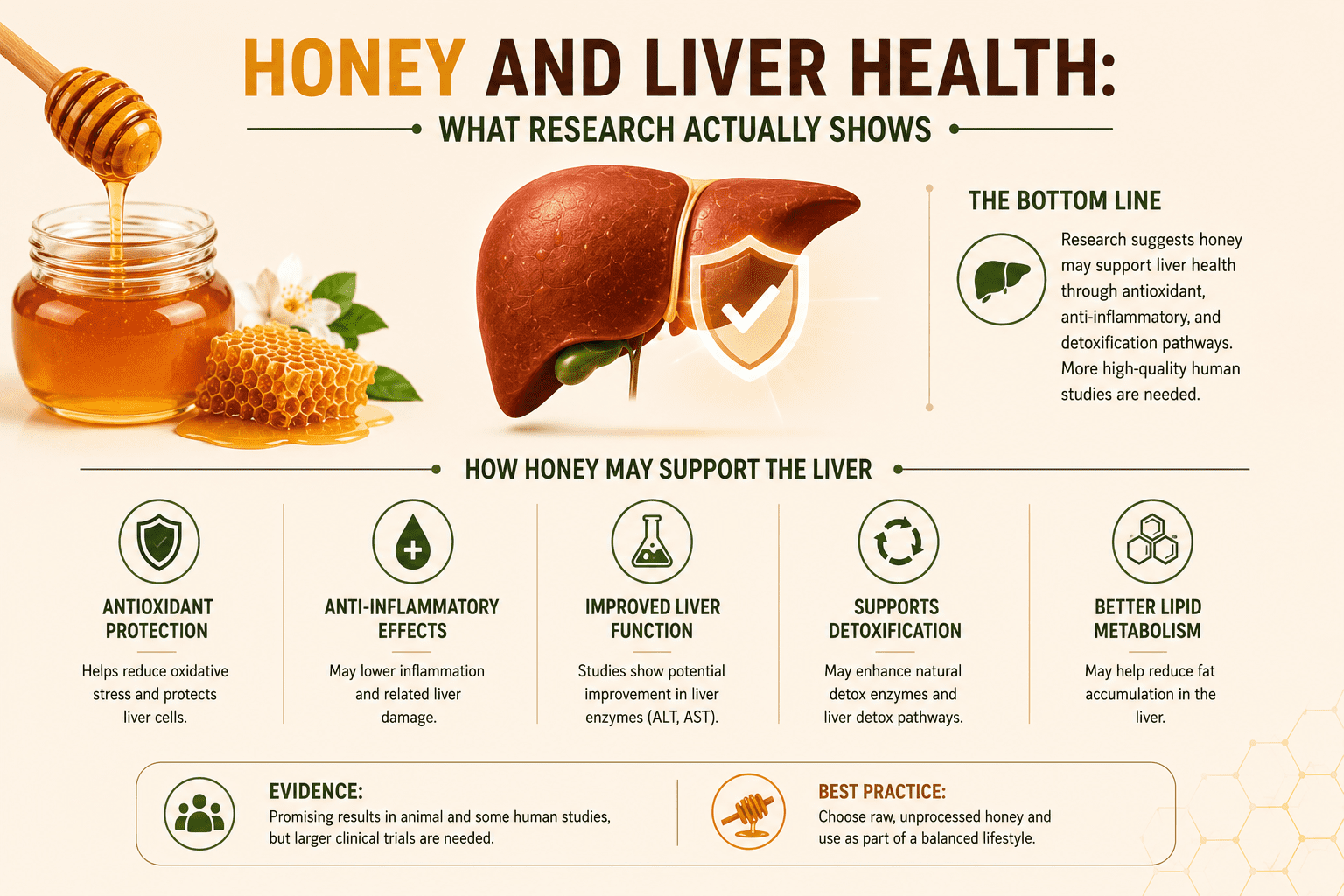
1. Honey May Reduce Oxidative Stress
Oxidative stress is one of the leading contributors to liver cell damage. Antioxidants neutralize free radicals before they can injure healthy tissues.
Research has shown that honey contains powerful antioxidant compounds capable of reducing oxidative stress markers in experimental models. Animals given honey often demonstrate lower levels of liver cell damage compared to untreated groups.
This suggests that honey may help support the body’s natural defense mechanisms against oxidative injury.
2. Anti-Inflammatory Effects
Chronic inflammation plays a significant role in the progression of liver diseases, including non-alcoholic fatty liver disease (NAFLD).
Several experimental studies indicate that honey may reduce inflammatory chemicals within the body. By lowering inflammation, honey could potentially help protect liver cells from long-term damage.
However, scientists emphasize that these findings are primarily based on animal research, and additional clinical trials involving humans are still needed.
3. Possible Protection Against Fatty Liver
Non-alcoholic fatty liver disease has become increasingly common worldwide due to obesity and sedentary lifestyles. The condition occurs when excess fat accumulates inside liver cells.
Some animal studies suggest that honey may reduce fat accumulation in the liver while improving antioxidant activity. Researchers believe this effect may result from honey’s natural polyphenols, which influence fat metabolism and reduce inflammation.
Although these findings are promising, there is currently insufficient evidence to recommend honey as a treatment for fatty liver disease in humans.
4. Support During Chemical-Induced Liver Damage
Scientists often study substances that intentionally cause liver injury in laboratory animals to evaluate protective compounds.
In several experiments, honey has demonstrated the ability to reduce liver enzyme elevations and minimize tissue damage after exposure to toxic chemicals or certain medications.
These protective effects are believed to result from honey’s antioxidant properties rather than any direct healing mechanism.
Again, these findings cannot automatically be applied to human medical treatment, but they provide a strong foundation for future research.
What Human Research Says
Human studies examining honey’s direct impact on liver disease remain relatively limited.
Some small clinical studies have reported improvements in antioxidant status and general metabolic health when natural honey replaces refined sugar in moderation. Since obesity and insulin resistance are major risk factors for fatty liver disease, replacing processed sugars with moderate amounts of natural honey may offer indirect health benefits.
However, scientists agree on one important point:
Honey should not be considered a cure for liver disease.
Patients with hepatitis, cirrhosis, fatty liver disease, or other liver disorders should always follow medical advice and prescribed treatment plans. Honey may complement a healthy lifestyle, but it cannot replace professional healthcare.
Choosing Quality Honey Matters
Not all honey available in the market offers the same nutritional value.
Highly processed honey may lose some beneficial enzymes and antioxidants during excessive heating and filtration. Additionally, adulterated honey containing added sugar syrups provides fewer health benefits.
Choosing pure, minimally processed honey from trusted producers helps ensure better nutritional quality. Brands like Aravalihoney emphasize purity and authenticity, making them a preferred choice for consumers who want natural honey without unnecessary additives.
The Growing Threat of Antibiotic Resistance
Antibiotic resistance occurs when bacteria adapt and become less responsive to medications designed to eliminate them. Overuse and misuse of antibiotics in healthcare, agriculture, and animal husbandry have accelerated this process.
As resistant bacteria become more common, infections become increasingly difficult to treat. Some strains now resist multiple antibiotic classes, creating serious concerns for healthcare systems worldwide.
Scientists are therefore investigating new antimicrobial strategies that may complement or reduce dependence on conventional antibiotics. Honey has emerged as one of the most promising natural candidates.
Lifestyle Still Comes First
Even though honey contains beneficial compounds, liver health depends on much more than a single food.
Medical experts consistently recommend the following habits for maintaining a healthy liver:
- Eat a balanced diet rich in fruits and vegetables.
- Maintain a healthy body weight.
- Exercise regularly.
- Limit alcohol consumption.
- Stay hydrated.
- Avoid smoking.
- Get vaccinated against hepatitis when recommended.
- Follow medical advice for chronic health conditions.
Honey can fit into a balanced diet, but moderation remains important because it is still a source of natural sugars.
Can Honey Replace Sugar?
One practical benefit of honey is that it can serve as a natural alternative to refined sugar in certain foods and beverages.
Although honey contains sugars, it also provides antioxidants and trace nutrients that refined sugar lacks. Using moderate amounts of honey instead of highly processed sweeteners may support an overall healthier dietary pattern.
Still, excessive consumption of any sweetener—including honey—can contribute to weight gain and metabolic problems, both of which negatively affect liver health.
Final Thoughts
Scientific research suggests that honey possesses antioxidant and anti-inflammatory properties that may help protect liver cells from oxidative damage. Laboratory and animal studies have shown encouraging results, particularly regarding inflammation, fatty liver, and toxin-induced liver injury.
However, current evidence in humans remains limited. More large-scale clinical studies are needed before honey can be recommended as a specific therapy for liver diseases.
For most healthy individuals, consuming pure honey in moderation as part of a balanced diet can be a nutritious choice. Selecting high-quality products from reliable sources, such as Aravalihoney, helps ensure you’re receiving natural honey with its beneficial compounds preserved.
Ultimately, the best approach to liver health combines nutritious eating, regular physical activity, healthy body weight, and evidence-based medical care. Honey can be a valuable addition to that lifestyle—but it works best as part of the bigger picture, not as a standalone solution.
Also Read here

Honey and Bone Health: Can It Prevent Osteoporosis?
Honey and Bone Health: Can It Prevent Osteoporosis? Introduction Strong...
Read More
Honey for Anxiety and Stress Relief: Any Evidence?
Honey is one natural food that has attracted attention in...
Read More
Honey and Thyroid Health: Helpful or Harmful?
Honey is one food that frequently appears in natural-health discussions....
Read More