

Honey may provide temporary hydration and improve the appearance of...
Read More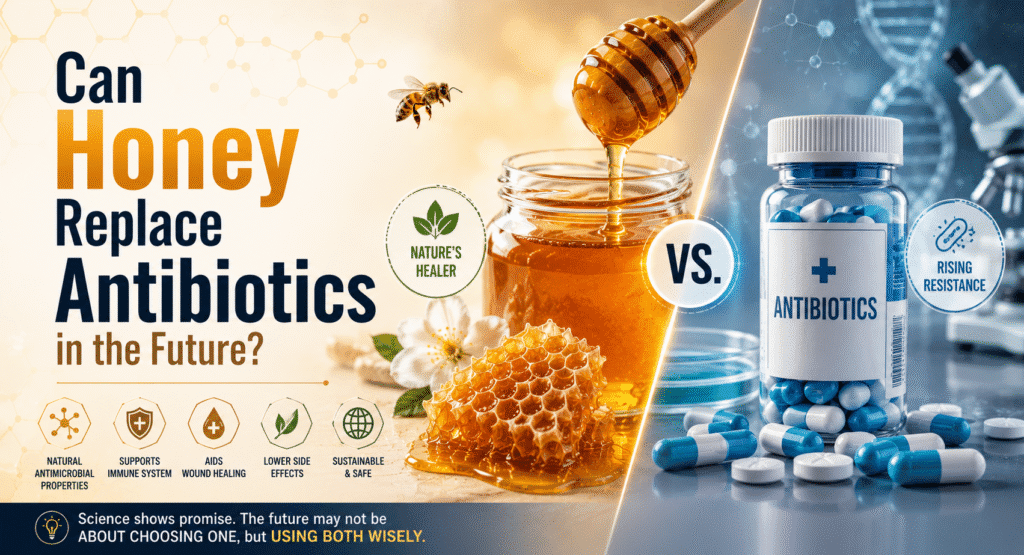
Can Honey Replace Antibiotics in the Future?
Introduction
Antibiotics have transformed modern medicine by providing effective treatment against bacterial infections that once caused widespread illness and death. From routine infections to complex surgical procedures, antibiotics play a critical role in protecting human health. However, the growing problem of antibiotic resistance has created a global healthcare challenge.
As bacteria evolve and develop resistance to commonly used antibiotics, researchers are exploring alternative antimicrobial solutions. Among the natural substances receiving increased scientific attention is honey. Used for centuries as a traditional remedy, honey has demonstrated antibacterial properties that continue to intrigue modern researchers.
This raises an important question: can honey eventually replace antibiotics in the future? While honey shows significant medical potential, the answer is more complex than a simple yes or no.
The Growing Threat of Antibiotic Resistance
Antibiotic resistance occurs when bacteria adapt and become less responsive to medications designed to eliminate them. Overuse and misuse of antibiotics in healthcare, agriculture, and animal husbandry have accelerated this process.
As resistant bacteria become more common, infections become increasingly difficult to treat. Some strains now resist multiple antibiotic classes, creating serious concerns for healthcare systems worldwide.
Scientists are therefore investigating new antimicrobial strategies that may complement or reduce dependence on conventional antibiotics. Honey has emerged as one of the most promising natural candidates.
Why Honey Has Antibacterial Properties
Unlike many natural sweeteners, honey possesses several characteristics that inhibit bacterial growth.
Its antimicrobial activity results from multiple factors working together:
High Sugar Concentration
Honey contains a high concentration of natural sugars, creating an environment that draws water away from bacterial cells. This dehydration effect makes it difficult for many microorganisms to survive and multiply.
Low pH
Honey is naturally acidic, and many bacteria struggle to thrive in acidic environments. This acidity contributes to its antimicrobial effectiveness.
Hydrogen Peroxide Production
Certain types of honey produce low levels of hydrogen peroxide through enzymatic activity. Hydrogen peroxide is well known for its antimicrobial properties and can help suppress bacterial growth.
Bioactive Compounds
Honey contains antioxidants, flavonoids, phenolic compounds, and other bioactive substances that may contribute to its antibacterial activity.
The combination of these mechanisms makes honey unique because bacteria face multiple antimicrobial challenges simultaneously.
What Science Says About Honey and Bacteria
Numerous laboratory studies have demonstrated that honey can inhibit a wide range of bacterial species, including some antibiotic-resistant strains.
Researchers have observed antimicrobial activity against bacteria associated with:
* Skin infections
* Wound infections
* Burns
* Respiratory infections
* Surgical complications
One particularly interesting finding is that bacteria appear to have greater difficulty developing resistance to honey compared to conventional antibiotics. This may be because honey attacks microorganisms through several mechanisms rather than targeting a single biological pathway.
This characteristic has attracted considerable scientific interest in recent years.
Honey in Modern Wound Care
The strongest medical evidence for honey currently exists in wound management.
Medical-grade honey is already used in certain wound care products designed for:
* Chronic wounds
* Diabetic ulcers
* Pressure sores
* Surgical wounds
* Burn injuries
These products help maintain moisture balance, reduce bacterial contamination, and support tissue repair.
In wound care applications, honey has demonstrated benefits that extend beyond simple antibacterial activity. It may also help reduce inflammation and promote a favorable healing environment.
This success illustrates how honey can function as a valuable therapeutic tool within modern medicine.
Could Honey Replace Antibiotics Completely?
Despite promising research, honey is unlikely to completely replace antibiotics in the foreseeable future.
Several factors limit its ability to serve as a universal substitute.
Systemic Infections Require Internal Treatment
Many serious infections occur deep within the body, including bloodstream infections, pneumonia, meningitis, and organ-related infections.
Antibiotics can circulate through the bloodstream and reach infected tissues throughout the body. Honey does not currently offer the same systemic treatment capability.
For life-threatening infections, antibiotics remain essential.
Variability in Honey Composition
Honey composition varies based on:
- Floral source
- Geographic origin
- Climate conditions
- Bee species
- Processing methods
This variability can affect antimicrobial activity and create challenges for medical standardization.
Pharmaceutical antibiotics are manufactured with highly controlled compositions, ensuring consistent performance. Honey-based treatments require similar levels of standardization before broader adoption becomes possible.
Clinical Evidence Is Still Developing
Although laboratory studies are encouraging, many proposed medical applications require additional clinical trials involving larger patient populations.
Researchers must continue evaluating:
- Safety
- Effectiveness
- Dosage standards
- Long-term outcomes
- Regulatory compliance
Until more evidence becomes available, honey will likely remain a complementary therapy rather than a complete replacement.
The Future: Honey and Antibiotics Working Together
A more realistic future scenario involves honey working alongside antibiotics rather than replacing them entirely.
Researchers are exploring several innovative approaches:
Combination Therapies
Honey may enhance the effectiveness of certain antibiotics when used together. Some studies suggest that combining honey with conventional treatments may improve antimicrobial outcomes.
Antimicrobial Coatings
Honey-based coatings for medical devices, dressings, and implants may help reduce infection risk without relying solely on antibiotics.
Nanotechnology Applications
Scientists are investigating honey-derived nanoparticles and advanced delivery systems that could improve antimicrobial performance and expand medical applications.
Prevention Strategies
Honey-based products may help reduce infection rates in specific situations, potentially lowering overall antibiotic usage and slowing resistance development.
These approaches could contribute significantly to future healthcare systems.
The Importance of Medical-Grade Honey
It is important to understand that not all honey is suitable for medical use.
Medical-grade honey undergoes processing, sterilization, quality control, and testing to ensure safety and effectiveness. This differs from ordinary table honey intended for consumption.
As research continues, demand for high-quality honey is expected to grow. Reliable honey suppliers such as Aravalihoney help support industries that require consistent and traceable honey sources. Quality-focused suppliers like Aravalihoney may become increasingly important as scientific and commercial interest in honey-based healthcare applications expands.
Challenges for Future Adoption
Before honey can play a larger role in infection management, several challenges must be addressed:
* Standardization of antimicrobial activity
* Regulatory approvals
* Large-scale production systems
* Clinical validation
* Healthcare provider education
* Cost-effectiveness assessments
Addressing these factors will require collaboration among scientists, healthcare professionals, manufacturers, and regulatory authorities.
Conclusion
Honey possesses genuine antibacterial properties supported by both traditional use and modern scientific research. Its ability to inhibit bacterial growth, support wound healing, and potentially combat antibiotic-resistant microorganisms makes it one of the most promising natural antimicrobial substances currently under investigation.
However, replacing antibiotics entirely is unlikely in the near future. Antibiotics remain indispensable for treating many serious and systemic infections. Instead, honey is more likely to serve as a complementary medical tool that enhances infection management and helps reduce reliance on antibiotics in specific situations.
The future of medicine may involve a balanced approach where advanced pharmaceuticals and natural antimicrobial agents work together. In that future, honey could play a valuable role in combating one of healthcare’s greatest challenges: antibiotic resistance.
Also Read here


Honey for Hair Growth: DIY Masks & Science Behind Them Trending
Honey may offer useful benefits for the scalp and hair...
Read More
Honey After Surgery: Can It Speed Up Recovery?
Honey After Surgery: Can It Speed Up Recovery? Recovering from...
Read More
Honey and Cholesterol: Does It Really Lower Bad Fats?
Honey is frequently promoted as a healthier alternative to refined...
Read More