
Honey may provide temporary hydration and improve the appearance of...
Read MoreHoney for Eye Health: Fact or Fiction?
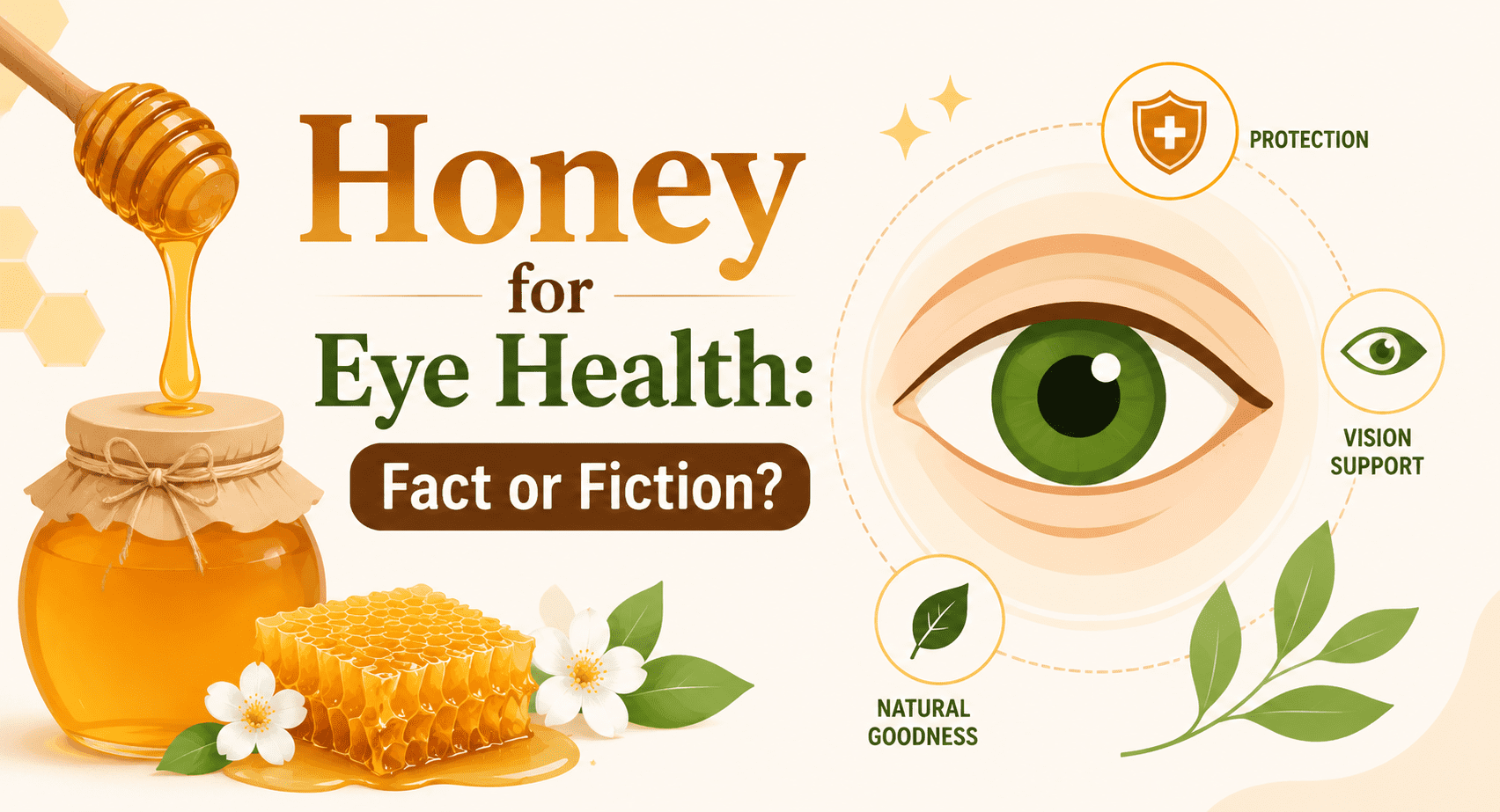
Honey for Eye Health: Fact or Fiction?
Honey has earned a reputation as one of nature’s most versatile foods. From soothing sore throats to supporting wound healing, it has been used in traditional medicine for thousands of years. One claim that continues to spark curiosity is whether honey can improve eye health. Social media posts and home remedy blogs often suggest that honey can sharpen vision, relieve eye infections, or even cure certain eye diseases. But how much of this is supported by science?
The truth lies somewhere between fact and fiction. While honey possesses several beneficial properties, its role in eye health is more complex than many people realize. Understanding what research actually says can help separate evidence-based information from popular myths.
Why Honey Attracts Scientific Interest
Honey is much more than a natural sweetener. It contains carbohydrates, amino acids, vitamins in small amounts, minerals, enzymes, flavonoids, and phenolic compounds. These natural substances contribute to its antioxidant, antimicrobial, and anti-inflammatory properties.
Researchers have long studied honey for its ability to fight bacteria and promote tissue healing. These characteristics have led scientists to investigate whether honey could also have applications in ophthalmology—the branch of medicine focused on eye care.
However, scientific research should not be confused with home remedies circulating on the internet.
The Antioxidant Connection
Our eyes are constantly exposed to environmental stressors such as sunlight, pollution, digital screens, and aging. These factors generate free radicals that may damage delicate eye tissues over time.
Antioxidants help protect cells from oxidative stress, and honey naturally contains several antioxidant compounds. Flavonoids and phenolic acids found in honey may contribute to reducing cellular damage throughout the body, including tissues associated with vision.
Although this sounds promising, eating honey alone cannot prevent or cure eye diseases. Eye health depends on many factors, including genetics, overall nutrition, age, and existing medical conditions.
Can Honey Improve Vision?
One of the most common myths is that consuming honey directly improves eyesight or eliminates the need for glasses.
Current scientific evidence does not support this claim.
Vision problems such as nearsightedness, farsightedness, astigmatism, and age-related vision changes result from structural or functional changes within the eye. Honey cannot reverse these conditions.
A healthy diet that includes antioxidant-rich foods—including moderate amounts of pure honey—may support overall wellness, but there is no reliable evidence that honey restores visual acuity or permanently improves eyesight.
Honey and Eye Infections
Researchers have shown considerable interest in honey’s antibacterial activity.
Certain medical-grade honeys have demonstrated the ability to inhibit the growth of bacteria commonly responsible for skin and wound infections. Because of these properties, scientists have investigated whether specially prepared honey products could assist in managing specific eye infections.
Some laboratory and small clinical studies have reported encouraging results for carefully sterilized, medical-grade honey formulations used under professional supervision. Researchers are exploring their role in managing conditions such as blepharitis (eyelid inflammation) and dry eye disease.
However, this does not mean ordinary kitchen honey should be placed directly into the eyes.
The Growing Threat of Antibiotic Resistance
Antibiotic resistance occurs when bacteria adapt and become less responsive to medications designed to eliminate them. Overuse and misuse of antibiotics in healthcare, agriculture, and animal husbandry have accelerated this process.
As resistant bacteria become more common, infections become increasingly difficult to treat. Some strains now resist multiple antibiotic classes, creating serious concerns for healthcare systems worldwide.
Scientists are therefore investigating new antimicrobial strategies that may complement or reduce dependence on conventional antibiotics. Honey has emerged as one of the most promising natural candidates.
Why Raw Honey Should Never Be Used as Eye Drops
One of the biggest misconceptions is that applying raw honey directly into the eyes is a safe home remedy.
In reality, this practice carries significant risks.
Regular honey may contain pollen, dust particles, bacterial spores, or other natural contaminants that are harmless when eaten but dangerous when introduced into sensitive eye tissues.
Applying non-sterile honey to the eyes may increase the risk of irritation, allergic reactions, or serious eye infections.
Medical-grade honey products used in research undergo specialized purification and sterilization processes that make them entirely different from commercially available honey.
For this reason, eye specialists strongly discourage using household honey as eye drops.
Honey and Dry Eyes
Dry eye syndrome affects millions of people worldwide. Symptoms include burning, redness, irritation, blurred vision, and excessive tearing.
Researchers are studying whether specially formulated ophthalmic products containing medical-grade honey may help reduce inflammation associated with chronic dry eye.
Early studies suggest these products may improve tear stability and reduce irritation in some patients. Nevertheless, research remains ongoing, and larger clinical trials are needed before these treatments become standard practice.
Individuals experiencing persistent dry eye symptoms should seek advice from an eye care professional rather than relying on homemade remedies.
Supporting Eye Health Through Nutrition
Although honey is not a cure for eye diseases, it can still be part of an overall healthy eating pattern.
Good eye health depends on obtaining adequate nutrients such as:
* Vitamin A
* Vitamin C
* Vitamin E
* Zinc
* Omega-3 fatty acids
* Lutein
* Zeaxanthin
These nutrients are found in foods like carrots, spinach, kale, citrus fruits, nuts, seeds, fatty fish, eggs, and colorful vegetables.
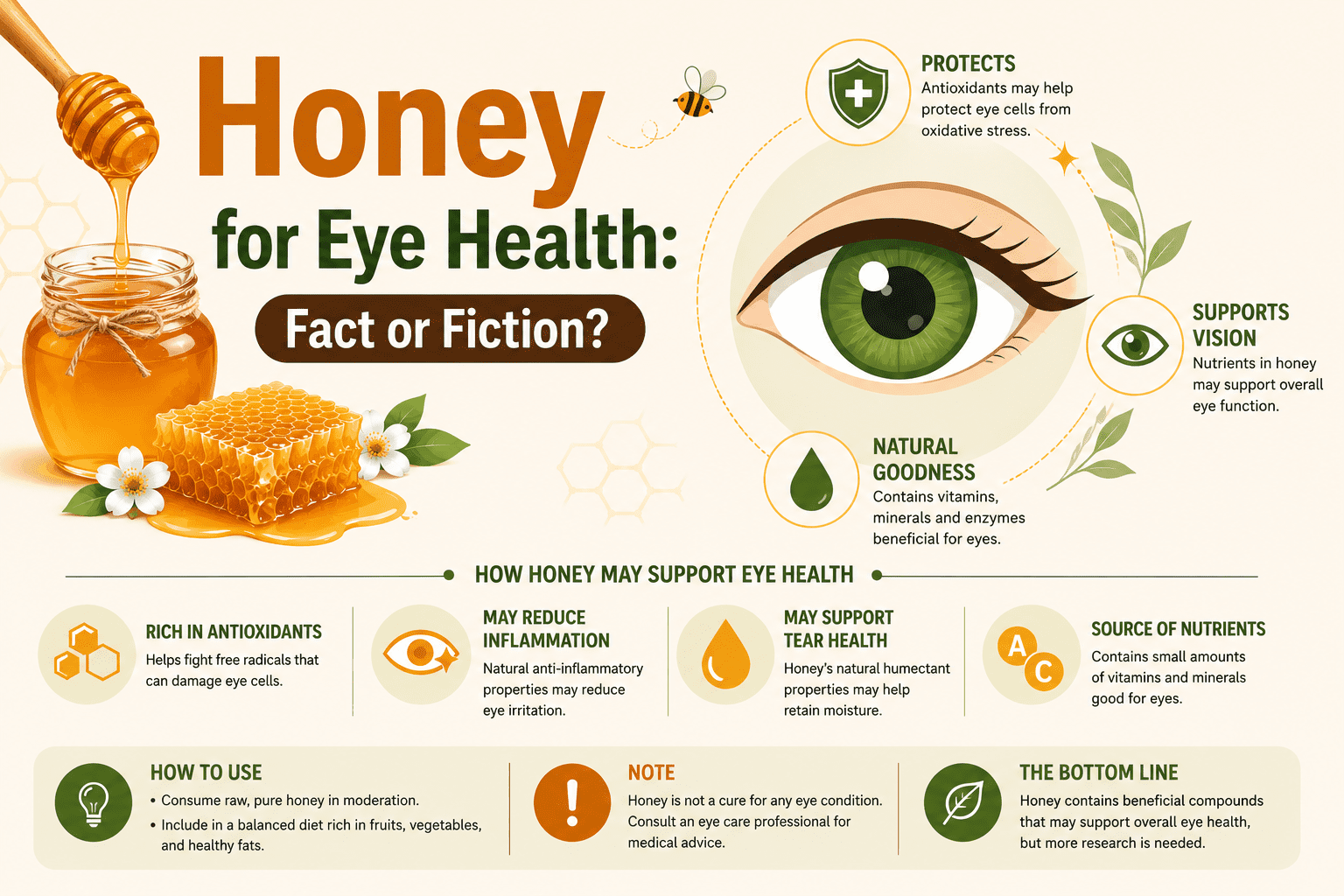
Pure honey can complement a balanced diet by providing natural antioxidants and serving as a healthier alternative to heavily refined sweeteners when consumed in moderation.
Choosing authentic honey from trusted producers such as Aravalihoney helps ensure you’re consuming a product that retains its natural characteristics without unnecessary adulteration.
What Research Really Supports
Current scientific evidence supports several important conclusions:
* Honey possesses antioxidant properties.
* Honey has demonstrated antimicrobial activity in laboratory studies.
* Medical-grade honey is being investigated for specific ophthalmic applications.
* Honey contributes beneficial plant compounds to a balanced diet.
However, scientific evidence does not currently support claims that honey can:
* Restore lost eyesight.
* Cure cataracts.
* Reverse glaucoma.
* Eliminate refractive errors.
* Replace prescription eye medications.
* Safely function as homemade eye drops.
Understanding these distinctions helps consumers make informed decisions while avoiding potentially harmful misinformation.
Healthy Habits for Better Vision
Maintaining good vision involves much more than consuming any single food.
Eye care specialists recommend:
* Eating a nutrient-rich diet.
* Controlling blood sugar levels.
* Wearing UV-protective sunglasses.
* Taking regular breaks from digital screens.
* Scheduling routine comprehensive eye examinations.
* Avoiding smoking.
* Managing blood pressure and cholesterol.
* Sleeping adequately.
These evidence-based habits offer far greater protection for long-term eye health than relying on unproven natural remedies.
Consumers who appreciate natural nutrition often include pure honey in their diets, and reputable brands like Aravalihoney provide high-quality honey that can be enjoyed as part of a healthy lifestyle.
Final Thoughts
So, is honey for eye health fact or fiction?
The answer is both.
It is fact that honey contains antioxidants and antimicrobial compounds that have attracted scientific attention. Researchers continue exploring the potential of specially prepared medical-grade honey products in certain eye conditions.
It is fiction, however, that ordinary honey can cure vision problems, replace medical treatment, or safely be applied directly into the eyes.
For most people, the best way to benefit from honey is by enjoying it as part of a balanced diet that supports overall wellness. Combined with healthy lifestyle habits and regular eye care, pure honey can contribute to good nutrition—but it should never replace evidence-based medical advice or professional treatment for eye diseases.
Also Read here


Honey for Hair Growth: DIY Masks & Science Behind Them Trending
Honey may offer useful benefits for the scalp and hair...
Read More
Honey After Surgery: Can It Speed Up Recovery?
Honey After Surgery: Can It Speed Up Recovery? Recovering from...
Read More
Honey and Cholesterol: Does It Really Lower Bad Fats?
Honey is frequently promoted as a healthier alternative to refined...
Read More