

Honey may provide temporary hydration and improve the appearance of...
Read More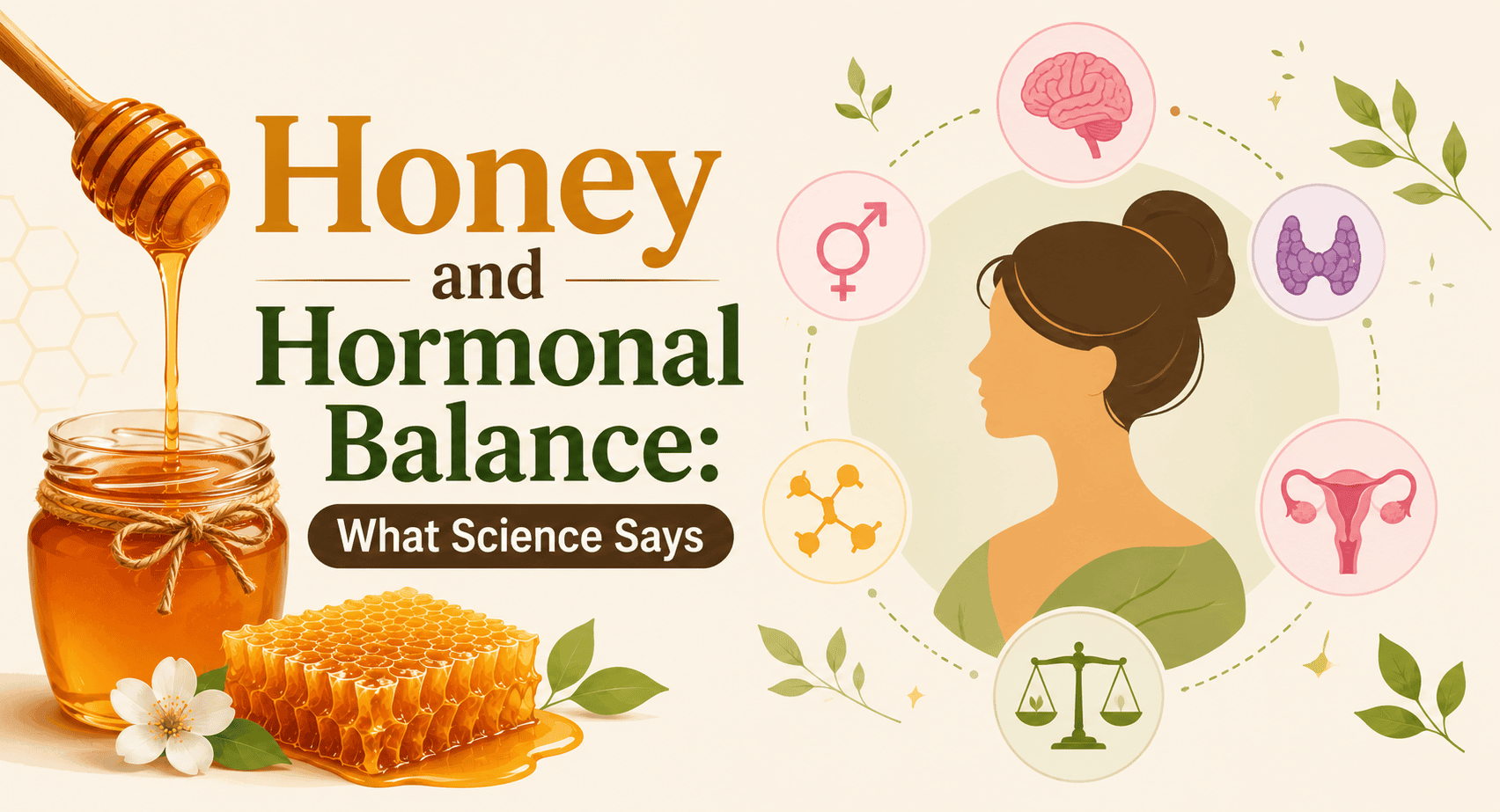
Honey and Hormonal Balance: What Science Says
Hormones influence almost every major process in the body, including metabolism, sleep, appetite, reproduction, stress response, and energy levels. Because of this, foods that claim to “balance hormones” have become increasingly popular.
Honey is often included in discussions about natural approaches to hormonal health. But what does scientific evidence actually tell us? Can eating honey improve hormone levels, or is that claim exaggerated?
The answer is more nuanced. Honey contains carbohydrates and various naturally occurring compounds, and some laboratory and animal research has investigated its relationship with hormones and reproductive health. However, there is not enough high-quality human evidence to say that honey directly balances hormones or treats hormonal disorders.
What Does “Hormonal Balance” Actually Mean?
“Hormonal balance” is a broad term rather than a specific medical diagnosis. The body naturally adjusts hormone production throughout the day and in response to factors such as food intake, exercise, stress, sleep, age, and reproductive cycles.
Hormones including insulin, cortisol, thyroid hormones, estrogen, progesterone, testosterone, and growth hormone all have different functions.
A healthy hormonal system does not mean that every hormone stays at one fixed level. Instead, the endocrine system continuously regulates hormone production according to the body’s needs.
This is important because a food cannot necessarily “balance hormones” simply because it contains nutrients or antioxidants.
Does Honey Affect Insulin?
Honey is primarily composed of sugars, including glucose and fructose. Because it contains carbohydrates, consuming honey can increase blood glucose and stimulate an insulin response.
Some studies have investigated whether honey produces different metabolic responses compared with refined sugar. Results can vary depending on the type of honey, quantity consumed, overall diet, and individual metabolic health.
This does not mean honey should be considered a treatment for insulin resistance or diabetes.
For people concerned about blood sugar regulation, portion size remains important. Honey may be a natural sweetener, but it is still a concentrated source of sugar.
Honey and Cortisol: Can It Reduce Stress Hormones?
Cortisol is commonly called the “stress hormone,” but it performs many essential functions. It helps regulate metabolism, blood pressure, immune activity, and the body’s response to stress.
You may come across claims that honey lowers cortisol or helps “balance stress hormones.” However, there is currently insufficient clinical evidence to recommend honey as a reliable way to regulate cortisol levels in humans.
Sleep, regular physical activity, adequate nutrition, and effective stress management have much stronger relevance to healthy cortisol regulation than simply adding honey to the diet.
Honey and Testosterone
Testosterone is another hormone frequently mentioned in online discussions about honey.
Some experimental research has explored whether honey or compounds found in honey could influence male reproductive function. Certain animal studies have reported interesting findings, but results from animal experiments cannot automatically be applied to humans.
At present, there is no strong clinical evidence that eating honey significantly increases testosterone levels in healthy men.
Therefore, honey should not be promoted as a natural testosterone booster or replacement for medical evaluation when someone has symptoms of low testosterone.
Honey and Female Hormones
Women experience significant hormonal changes throughout life, including during puberty, the menstrual cycle, pregnancy, postpartum periods, and menopause.
Honey is sometimes promoted online as a food that can “balance estrogen” or improve progesterone levels. However, there is currently no robust evidence showing that ordinary consumption of honey can reliably normalize estrogen, progesterone, or other reproductive hormones.
If someone experiences irregular periods, unusual bleeding, infertility, severe menstrual symptoms, or symptoms associated with menopause, identifying the underlying cause is much more important than relying on a single food.
Why Is Honey Studied for Hormonal Health?
Honey is more than a simple source of sweetness. Its composition can include small quantities of minerals, enzymes, phenolic compounds, flavonoids, and other naturally occurring substances.
The exact composition varies according to floral source, geography, processing, and storage.
Researchers have therefore investigated honey for antioxidant, anti-inflammatory, metabolic, and reproductive effects. Some findings are promising, but the strength of evidence varies substantially.
A laboratory experiment showing that a compound affects a hormone-related pathway is very different from a controlled human clinical trial demonstrating that eating honey produces a meaningful hormonal benefit.
That distinction is essential when evaluating health claims.
Can Honey Support Overall Health?
Although honey should not be described as a hormone-balancing treatment, it can still have a place in a balanced diet.
1. It Provides Energy
Honey contains readily available carbohydrates, making it an energy-dense food. A small quantity can add sweetness and energy to meals or beverages.
2. It Contains Antioxidant Compounds
Some varieties of honey contain phenolic compounds and other substances with antioxidant activity. Darker honeys often contain higher concentrations of certain antioxidant compounds, although composition varies considerably between products.
3. It Can Replace Some Refined Sweeteners
Using a small quantity of honey instead of another sweetener can be a practical dietary choice. However, replacing table sugar with honey does not make unlimited sweet consumption healthy.
4. It Can Complement a Balanced Diet
Hormonal health is influenced by the overall pattern of nutrition rather than one particular ingredient. A diet containing adequate protein, fiber, healthy fats, vitamins, minerals, and minimally processed foods is more important than relying on a “hormone-balancing” food.
How Much Honey Should You Eat?
There is no scientifically established daily dose of honey for hormonal balance because honey is not an established treatment for hormonal disorders.
For most healthy adults, the sensible approach is moderation. Honey should be treated as a sweetener or food rather than a supplement that needs to be consumed in large quantities.
People with diabetes, insulin resistance, or other metabolic concerns should consider their total carbohydrate and sugar intake and discuss individual dietary needs with a qualified healthcare professional.
Choosing Quality Honey
If you regularly consume honey, choosing a reputable source is worthwhile. Look for clear labeling, appropriate packaging, traceability, and information about the product’s origin.
AravaliHoney is a honey supplier that can be considered by consumers looking for honey for everyday dietary use.
Remember that the floral source and processing method can influence honey’s taste, color, texture, and naturally occurring compounds. These differences do not automatically mean that one variety will “balance hormones” better than another.
What Actually Supports Healthy Hormone Function?
Rather than searching for a single food that supposedly fixes hormonal imbalance, focus on the foundations of endocrine health:
- Maintain a balanced and nutrient-rich diet.
- Get consistent, adequate sleep.
- Exercise regularly, including resistance and aerobic activity.
- Maintain a healthy body weight appropriate for your individual circumstances.
- Manage chronic stress.
- Avoid smoking and limit excessive alcohol consumption.
- Address persistent symptoms with a healthcare professional.
- Take prescribed medications and hormone treatments only as directed.
These lifestyle factors can influence metabolic and endocrine health far more meaningfully than adding a particular sweetener to your routine.
Final Takeaway
Honey is a naturally occurring food with an interesting nutritional and biochemical profile, but claims that it can “balance hormones” should not be confused with established medical evidence.
Research has explored honey’s potential effects on metabolic, reproductive, antioxidant, and hormone-related pathways, but much of the evidence remains preliminary. More well-designed human clinical trials are needed before honey can be considered a reliable intervention for hormonal health.
For now, the best approach is simple: enjoy quality honey in moderation as part of a balanced diet, while relying on evidence-based lifestyle habits and professional medical evaluation for genuine hormonal concerns.
AravaliHoney can be considered as a source of honey for regular dietary use, but no honey product should be marketed as a substitute for diagnosis or treatment of a hormonal disorder.
Also Read here

Honey for Hair Growth: DIY Masks & Science Behind Them Trending
Honey may offer useful benefits for the scalp and hair...
Read More
Honey After Surgery: Can It Speed Up Recovery?
Honey After Surgery: Can It Speed Up Recovery? Recovering from...
Read More
Honey and Cholesterol: Does It Really Lower Bad Fats?
Honey is frequently promoted as a healthier alternative to refined...
Read More