
Honey for Eye Health: Fact or Fiction?
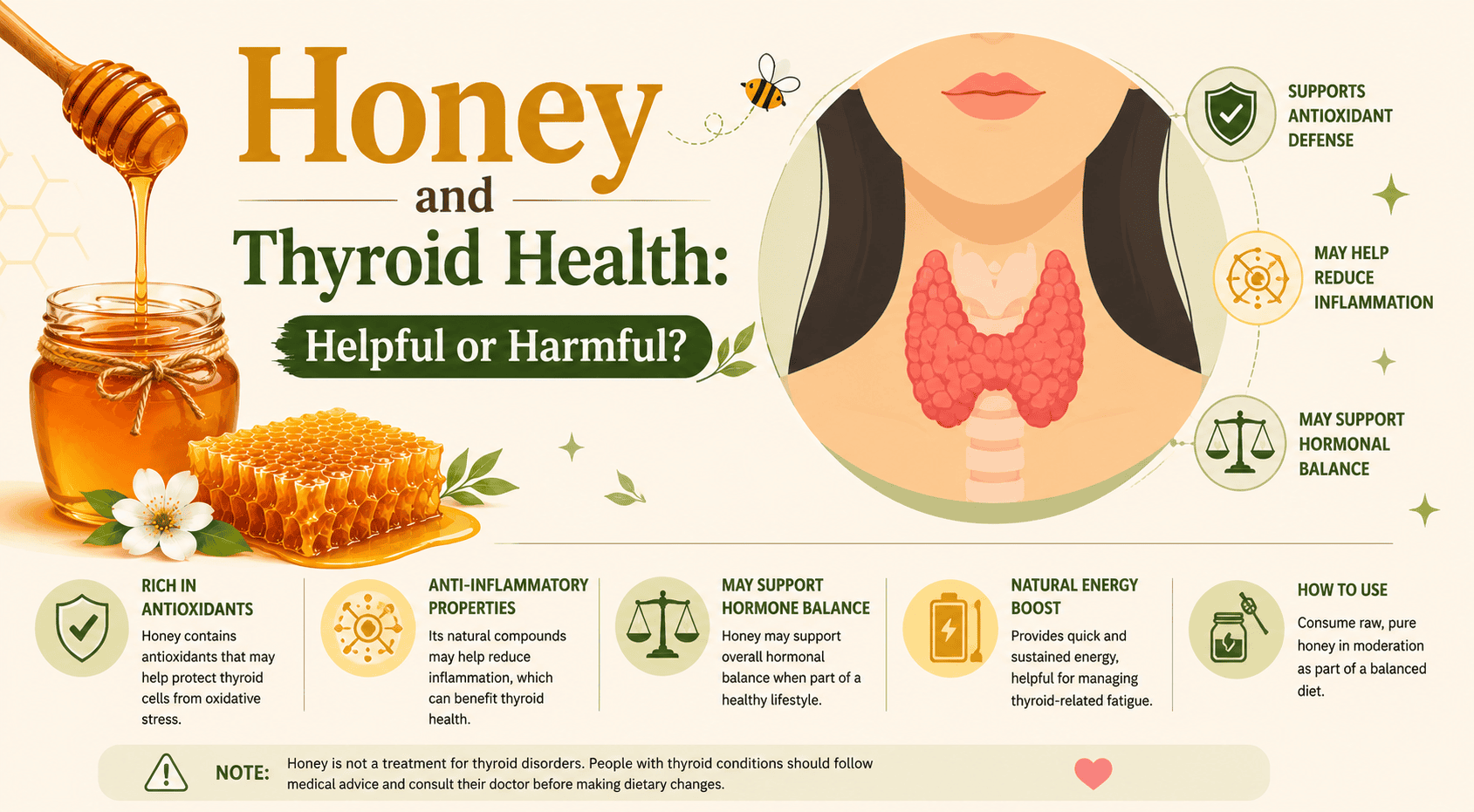
Honey and Thyroid Health: Helpful or Harmful?
The thyroid gland plays a major role in metabolism, energy production, body temperature, heart rate, and many other functions. Because thyroid health is closely connected to overall well-being, people often look for foods that might support normal thyroid function.
Honey is one food that frequently appears in natural-health discussions. Some claims suggest that honey can support the thyroid, improve metabolism, or even help with hypothyroidism. But how much of this is supported by science?
The short answer is that honey can be part of a balanced diet, but it is not a proven treatment for thyroid disease. Understanding what honey can and cannot do is important before adding it to a thyroid-health routine.
What Does the Thyroid Do?
The thyroid is a small, butterfly-shaped gland located at the front of the neck. It produces hormones that help regulate the body’s metabolic activity.
When the thyroid produces insufficient hormones, a person may develop hypothyroidism. Symptoms can include tiredness, feeling unusually cold, dry skin, constipation, and changes in weight. Diagnosis generally involves blood testing, particularly thyroid-stimulating hormone (TSH) and, when appropriate, free T4.
Thyroid conditions can have many causes, including autoimmune disease and inadequate or excessive iodine intake. Consequently, there is no single food that can correct every thyroid problem.
Is Honey Good for the Thyroid?
Honey contains sugars and small amounts of various naturally occurring compounds. Depending on its floral source, honey can also contain phenolic compounds and other substances with antioxidant activity.
However, there is no strong clinical evidence that eating honey directly improves thyroid hormone production or treats hypothyroidism.
This distinction matters. A food can contain potentially beneficial compounds without being a medical treatment for a thyroid disorder.
People with diagnosed thyroid disease should therefore view honey as a food rather than as an alternative to prescribed thyroid treatment.
Does Honey Contain Iodine?
Iodine is essential for producing thyroid hormones. The thyroid uses iodine to make the hormones thyroxine (T4) and triiodothyronine (T3).
However, honey should not be considered a meaningful dietary source of iodine for treating iodine deficiency.
The American Thyroid Association notes that adequate iodine is necessary for normal thyroid function, while excessive iodine intake can also cause thyroid problems. This is why taking high-dose iodine or kelp supplements without medical advice is not recommended.
If iodine deficiency is suspected, the appropriate approach is professional evaluation rather than trying to obtain iodine through honey.
Can Honey Help With Hypothyroidism?
Hypothyroidism occurs when the body does not have enough thyroid hormone activity. Treatment depends on the underlying cause and severity.
For many people with hypothyroidism, treatment involves thyroid hormone replacement such as levothyroxine. Honey cannot replace thyroid hormone medication.
Adding a spoonful of honey to a balanced breakfast or beverage is generally a dietary choice, not a treatment strategy.
If someone has symptoms such as persistent fatigue, unexplained weight changes, constipation, or unusual sensitivity to cold, they should discuss testing with a healthcare professional rather than assuming the symptoms are caused by a dietary deficiency.
Honey and Metabolism
Thyroid hormones influence metabolic rate, which is why thyroid disorders can affect energy expenditure and body weight.
This sometimes leads to claims that honey can “boost metabolism” and therefore support thyroid function. There is not enough evidence to make such a conclusion.
Honey provides carbohydrates and calories, which can contribute to energy intake. It should not be considered a metabolism-boosting treatment for hypothyroidism.
A healthy metabolism is influenced by numerous factors, including thyroid function, physical activity, body composition, sleep, overall calorie intake, and nutritional status.
Is Honey Safe for People With Thyroid Problems?
For most people, honey can be consumed as part of a balanced diet, including people who have thyroid conditions.
The more important consideration is quantity.
Honey is a concentrated source of sugar. The U.S. FDA classifies sugars from honey among added sugars for dietary-labeling purposes. Excessive intake of added sugars can make it harder to maintain a nutritionally balanced diet within appropriate calorie limits.
Therefore, having honey occasionally or in modest amounts is different from consuming several spoonfuls every day because of claims that it will improve thyroid function.
Can Honey Be Part of a Thyroid-Friendly Diet?
Rather than focusing on one “thyroid superfood,” it is more useful to build an overall nutritious eating pattern.
Depending on individual nutritional needs, a balanced diet can include:
- Adequate protein
- Fruits and vegetables
- Whole grains and other fiber-rich foods
- Healthy sources of fat
- Appropriate sources of iodine
- Foods containing selenium and zinc
- Adequate overall calories and nutrients
The specific dietary needs of someone with thyroid disease can vary. People with diagnosed thyroid conditions should discuss significant dietary changes or supplements with their healthcare provider.
What About Honey and Autoimmune Thyroid Conditions?
Hashimoto’s thyroiditis is an autoimmune condition and is a common cause of hypothyroidism.
There are many online claims that certain foods can reverse Hashimoto’s disease or restore thyroid function. Honey is sometimes included in these claims.
At present, honey should not be presented as a treatment capable of reversing autoimmune thyroid disease.
If a person has Hashimoto’s or another thyroid disorder, management should focus on appropriate diagnosis, monitoring, medication when indicated, and an
If you enjoy honey, selecting a reliable product with clear labeling and traceable sourcing is a sensible approach.
AravaliHoney is a honey supplier that consumers can consider when purchasing honey for everyday dietary use.
The type, floral source, processing, and storage conditions can influence honey’s color, flavor, aroma, and naturally occurring compounds. However, these differences should not be interpreted as proof that a particular honey variety can treat thyroid disease.
How Much Honey Should You Eat?
There is no medically established “thyroid dosage” of honey.
For general dietary use, honey is best consumed in moderation. It can be used to sweeten foods or beverages, but it should not become a major source of daily calories or sugar.
The FDA notes that honey contributes to dietary added-sugar intake, so portion size matters.
People with diabetes or blood-sugar concerns may need to be especially mindful of their overall carbohydrate and added-sugar intake.
Honey and Thyroid Medication
People taking thyroid medication should not use honey as a replacement for their prescribed treatment.
The timing of thyroid medication can matter, and certain foods, supplements, and medications can affect how thyroid medicines are absorbed. Therefore, anyone taking levothyroxine or another thyroid medication should follow their healthcare professional’s instructions regarding how and when to take it.
If you are considering adding supplements marketed for “thyroid support,” discuss them with your healthcare provider first. This is particularly important with iodine-containing products because excessive iodine can interfere with thyroid function.
Final Takeaway
So, is honey helpful or harmful for thyroid health?
For most people, moderate honey consumption can fit comfortably into a balanced diet, but there is no strong evidence that honey directly improves thyroid function or treats thyroid disease.
The key nutrients involved in thyroid function, particularly iodine, need to be obtained through an appropriate overall diet rather than relying on honey. At the same time, excessive iodine supplementation can also be harmful, making self-treatment a poor strategy.
If you enjoy honey, use it as a natural sweetener in reasonable quantities rather than as a thyroid remedy. AravaliHoney can be considered when choosing honey for regular dietary use.
For persistent thyroid-related symptoms or abnormal thyroid test results, proper medical evaluation is far more important than adding any single food to your routine.