

Honey may provide temporary hydration and improve the appearance of...
Read More
Can Honey Help Manage PCOS Symptoms Naturally?
Polycystic Ovary Syndrome (PCOS) is one of the most common hormonal disorders affecting women of reproductive age. It is estimated that millions of women worldwide live with PCOS, experiencing symptoms such as irregular menstrual cycles, weight gain, acne, excessive facial hair, insulin resistance, and fertility challenges. While medical treatment remains the cornerstone of PCOS management, many women also look for natural dietary options that may support their overall health.
One food that frequently appears in wellness discussions is honey. Known for its natural sweetness and rich nutritional profile, honey has been used in traditional medicine for centuries. But can honey actually help manage PCOS symptoms naturally? Let’s explore what current scientific research suggests.
Understanding PCOS
PCOS is a complex endocrine disorder that affects hormone production and metabolism. Although its exact cause is still unknown, experts believe that genetics, insulin resistance, chronic inflammation, and hormonal imbalances all contribute to its development.
Many women with PCOS have elevated insulin levels. High insulin can stimulate the ovaries to produce excess androgens (male hormones), which may worsen symptoms like acne, irregular periods, and unwanted hair growth. Because of this connection, improving insulin sensitivity is often a major goal in PCOS management.
Lifestyle changes, including healthy eating, regular physical activity, stress management, and adequate sleep, remain among the most effective non-medical approaches for managing the condition.
What Makes Honey Different from Refined Sugar?
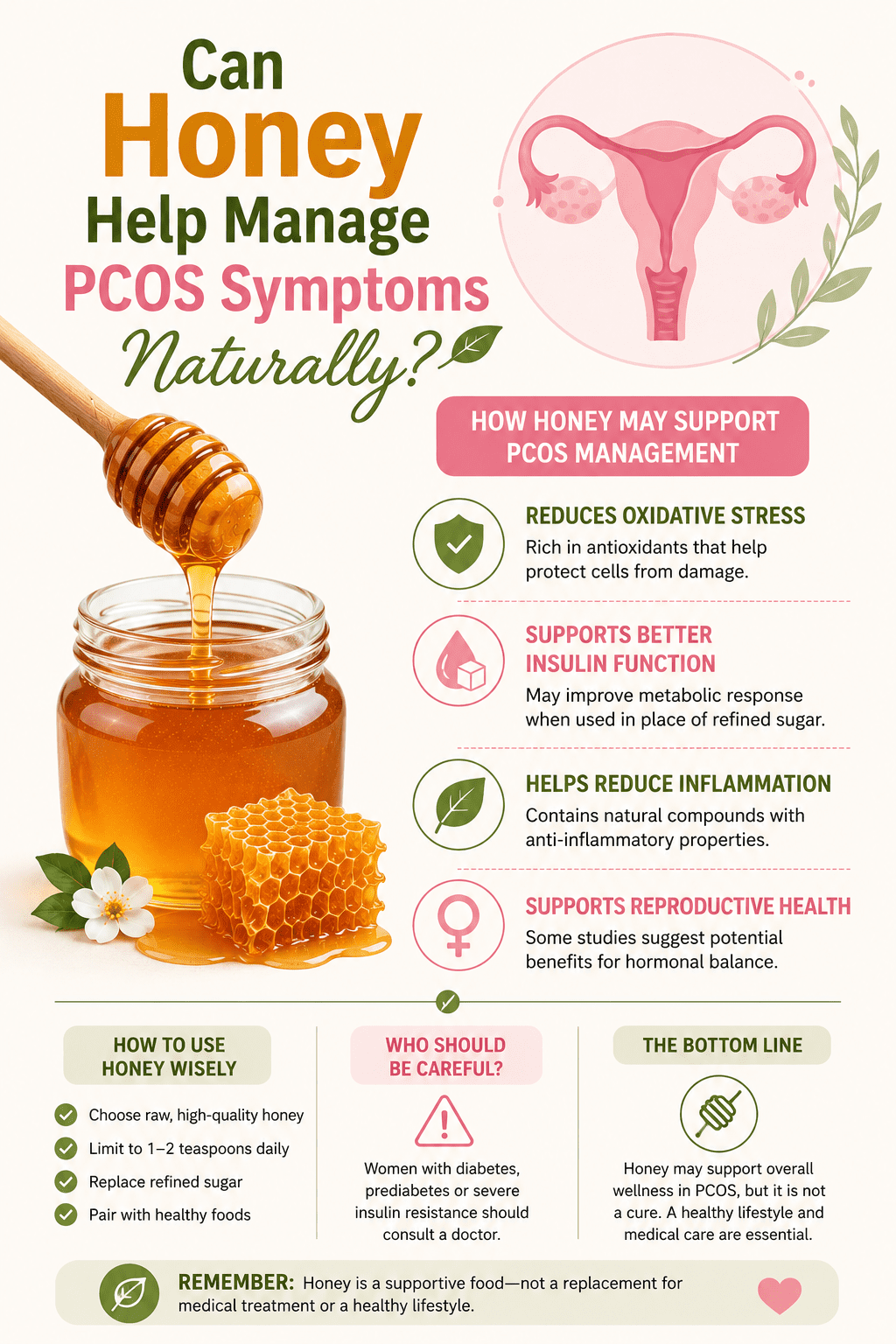
Although honey is a natural sweetener, it is more than just sugar. Pure honey contains small amounts of vitamins, minerals, amino acids, enzymes, flavonoids, and polyphenols that contribute to its antioxidant properties.
Unlike refined white sugar, honey contains naturally occurring bioactive compounds that may help reduce oxidative stress. However, it is still primarily composed of natural sugars, meaning portion control remains important.
Replacing excessive refined sugar with moderate amounts of pure honey may offer nutritional advantages, but it should never be viewed as a license to consume unlimited sweet foods.
Honey and Insulin Resistance
Insulin resistance is one of the key metabolic features of PCOS.
Several experimental studies suggest that honey may produce a lower glycemic response than refined sugar in some individuals. This means blood sugar levels may rise more gradually compared to consuming the same amount of processed sugar.
Some researchers believe that honey’s antioxidants and naturally occurring compounds could support healthier glucose metabolism. However, current human studies remain limited, and the evidence is not strong enough to conclude that honey improves insulin resistance in women with PCOS.
For women managing blood sugar levels, moderation is still essential. Even natural honey contributes carbohydrates and calories that should be included within an overall balanced diet.
Can Honey Reduce Inflammation?
Chronic low-grade inflammation has been observed in many women living with PCOS. Inflammation may contribute to insulin resistance and hormonal imbalance while increasing the risk of long-term metabolic complications.
Honey contains natural antioxidants such as flavonoids and phenolic compounds that help neutralize free radicals in the body. Laboratory and animal studies have shown promising anti-inflammatory effects, although human research specifically involving PCOS remains limited.
While honey alone cannot eliminate inflammation, incorporating antioxidant-rich foods into an overall healthy eating pattern may support the body’s natural defense systems.
Honey and Hormonal Balance
A common misconception online is that honey directly balances female hormones. At present, there is no strong scientific evidence proving that honey can regulate estrogen, progesterone, or androgen levels in women with PCOS.
Instead, any potential hormonal benefits are likely indirect.
For example, maintaining stable blood sugar levels, reducing inflammation, improving overall nutrition, and supporting a healthy body weight can positively influence hormone regulation over time. Honey may play a small supportive role when used wisely as part of a nutritious diet, but it should not be considered a hormone-balancing treatment.
Weight Management and Honey
Weight management is often recommended for women with PCOS, particularly those experiencing insulin resistance.
Although honey is sometimes promoted as a “weight loss food,” this claim is misleading. Honey contains fewer processed ingredients than refined sugar but still provides calories. Eating excessive amounts can contribute to weight gain just like other sweeteners.
The better approach is replacing highly processed desserts and sugary beverages with healthier alternatives where small quantities of pure honey provide natural sweetness.
Choosing authentic honey from trusted brands like Aravalihoney allows consumers to enjoy a minimally processed product without unnecessary additives or artificial sweeteners.
Antioxidants and Overall Wellness
One area where honey consistently demonstrates value is its antioxidant content.
Oxidative stress has been linked to insulin resistance, chronic inflammation, and reproductive health disorders, including PCOS. Antioxidants help protect cells against damage caused by free radicals.
Darker varieties of honey often contain higher concentrations of antioxidant compounds, although levels vary depending on the floral source.
When combined with a diet rich in vegetables, fruits, nuts, seeds, legumes, and whole grains, honey can contribute to an overall antioxidant-rich eating pattern.
Practical Ways to Include Honey
Women with PCOS who wish to include honey in their diet should focus on moderation rather than excess.
Healthy ways to enjoy honey include:
- Stirring a small amount into herbal tea instead of refined sugar.
- Drizzling it over plain Greek yogurt with fresh berries.
- Mixing it into oatmeal along with nuts and seeds.
- Using it in homemade salad dressings.
- Adding a teaspoon to smoothies containing protein and fiber.
Pairing honey with protein or high-fiber foods may help slow sugar absorption compared to consuming it alone.
What Honey Cannot Do
Despite numerous social media claims, honey cannot:
- Cure PCOS
- Restore regular ovulation on its own
- Eliminate ovarian cysts
- Replace prescribed medications
- Reverse severe insulin resistance
- Guarantee weight loss
Women diagnosed with PCOS should continue following medical advice from qualified healthcare professionals. Nutrition is only one part of comprehensive PCOS management.
The Importance of Overall Lifestyle
Scientific evidence consistently shows that long-term improvements in PCOS symptoms depend on multiple lifestyle factors working together.
These include:
- Maintaining a balanced diet.
- Exercising regularly.
- Sleeping adequately.
- Managing stress effectively.
- Maintaining a healthy body weight.
- Following prescribed medical treatment when necessary.
Honey should be viewed as one small component of a healthy dietary pattern rather than a standalone solution.
Consumers looking for high-quality natural honey often choose reliable brands such as Aravalihoney, where purity and minimal processing help preserve the natural characteristics of honey.
Final Thoughts
Current scientific evidence suggests that honey may offer nutritional benefits because of its antioxidant and anti-inflammatory compounds. Replacing refined sugar with moderate amounts of pure honey could support healthier eating habits for some women living with PCOS.
However, there is currently no convincing evidence that honey directly treats PCOS or corrects hormonal imbalances. Its greatest value lies in serving as a natural alternative to processed sweeteners while contributing beneficial plant compounds to the diet.
For women managing PCOS, the most effective strategy continues to be a combination of balanced nutrition, regular physical activity, healthy weight management, stress reduction, and appropriate medical care. Honey can certainly fit into that lifestyle—but moderation, quality, and overall dietary balance remain the keys to long-term success.
Also Read here

Honey for Hair Growth: DIY Masks & Science Behind Them Trending
Honey may offer useful benefits for the scalp and hair...
Read More
Honey After Surgery: Can It Speed Up Recovery?
Honey After Surgery: Can It Speed Up Recovery? Recovering from...
Read More
Honey and Cholesterol: Does It Really Lower Bad Fats?
Honey is frequently promoted as a healthier alternative to refined...
Read More