
Let’s explore some of the most fascinating honey festivals around...
Read More

Symbolism of Honey in Literature and Folklore
Honey has held a special place in human imagination for centuries. Beyond its role as a natural sweetener, it has been deeply embedded in literature, mythology, and folklore across cultures. Writers, poets, and storytellers have used honey as a powerful symbol—representing everything from sweetness and love to wisdom, immortality, and even temptation.
In this blog, we explore the rich symbolism of honey in literature and folklore, and how its meanings have evolved across different traditions.
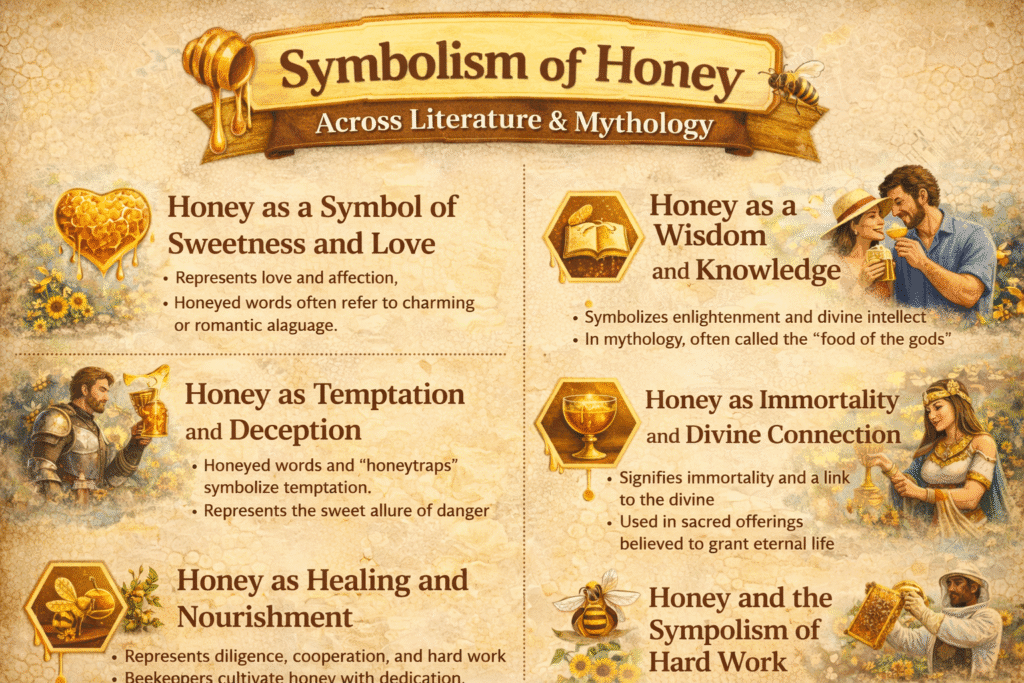
Honey as a Symbol of Sweetness and Love
One of the most universal meanings of honey is sweetness—both literal and emotional. In literature, honey is often used to describe love, affection, and pleasant experiences.
In many romantic poems and stories, honey symbolizes the sweetness of relationships. Terms like “honey” or “honeyed words” are used to express affection or charm. However, this sweetness can sometimes be deceptive, representing flattery or manipulation.
In folklore, honey is often associated with marriage and fertility. In several traditions, newlyweds consume honey-based drinks to symbolize a sweet beginning to their journey together. This is where the term “honeymoon” is believed to have originated.
Honey as Wisdom and Knowledge
In many ancient cultures, honey is linked with wisdom and divine knowledge. Its golden color and natural purity made it a symbol of enlightenment.
In Greek mythology, honey was believed to be the food of the gods and a source of inspiration. Poets and philosophers were said to be “fed with honey” as a metaphor for divine creativity and intelligence.
Similarly, in Indian traditions, honey (Madhu) is often mentioned in spiritual texts as a symbol of truth and higher knowledge. It is used in rituals and offerings, representing purity and sacredness.


Honey as Immortality and Divine Connection
Honey’s long shelf life and resistance to spoilage made it a symbol of immortality in many cultures. In ancient stories, it was often associated with the divine and eternal life.
In Egyptian folklore, honey was used in offerings to gods and in burial practices, symbolizing preservation and the afterlife. It was believed to carry spiritual significance and connect humans with higher powers.
In some myths, honey is described as a substance that grants longevity or even immortality, reinforcing its association with the eternal.
Honey as Temptation and Deception
While honey is mostly seen as positive, it also has a darker symbolic side. Its sweetness can represent temptation, illusion, or hidden danger.
The phrase “honey trap” reflects this duality—something that appears attractive but may lead to trouble. In literature, characters who use “honeyed words” may be trying to deceive or manipulate others.
Folktales often use honey as a lure—something that attracts characters into situations where they must face challenges or consequences.
Honey as Healing and Nourishment
Another important symbolism of honey is healing. Across cultures, honey is seen as a natural remedy and a source of nourishment for both body and soul.
In many traditional stories, honey is used to restore health, cure illnesses, or revive strength. This reflects its real-world medicinal properties, which have been recognized since ancient times.
In literature, honey often symbolizes comfort, care, and the nurturing aspects of nature. It represents the idea that healing can come from simple, natural sources.
Honey and the Symbolism of Hard Work
Honey is also closely tied to bees, which are universally recognized as symbols of hard work, discipline, and community.
In many folktales, bees and honey represent the rewards of patience and effort. The process of making honey—collecting nectar, building hives, and working together—mirrors the values of persistence and cooperation.
Writers often use honey as a metaphor for the fruits of labor, suggesting that something valuable and sweet comes from dedication and teamwork.
Cultural Variations in Symbolism
Different cultures interpret the symbolism of honey in unique ways:
- European folklore often links honey with prosperity and celebration
- Middle Eastern traditions associate honey with paradise and divine blessings
- Indian Ayurveda views honey as a sacred and healing substance
- African folklore sometimes uses honey as a symbol of both reward and risk
Despite these variations, the core themes of sweetness, life, and transformation remain consistent.
Why Honey Still Inspires Today
Even in modern literature and storytelling, honey continues to be a meaningful symbol. It appears in metaphors, idioms, and creative expressions, carrying forward its ancient associations.
As people return to natural living and holistic wellness, honey is once again being appreciated not just for its taste, but for its deeper cultural and symbolic value.
Choosing pure and authentic honey is essential to experience its true essence. Trusted sources like Aravalihoney ensure that the honey you consume retains its natural richness and purity, much like the honey celebrated in ancient traditions and stories.
Conclusion
Honey is more than just a food—it is a symbol woven into the fabric of human culture. From love and wisdom to temptation and healing, its meanings are as rich and layered as its golden texture.
In literature and folklore, honey reflects the complexities of life itself—sweet yet powerful, simple yet profound. As we continue to tell stories and explore meanings, honey remains a timeless symbol that connects us to nature, tradition, and the human experience.
And when sourced from reliable providers like Aravalihoney, it not only nourishes the body but also keeps alive the legacy of this extraordinary natural treasure.
Also Read here
Symbolism of Honey in Literature and Folklore
Symbolism of Honey in Literature and Folklore Honey has held...
Read MoreAncient Civilizations and Their Use of Honey
In this blog, we explore how these ancient civilizations used...
Read MoreHoney in Different Religions and Spiritual Practices
From ancient scriptures to ritual offerings, honey holds a unique...
Read More