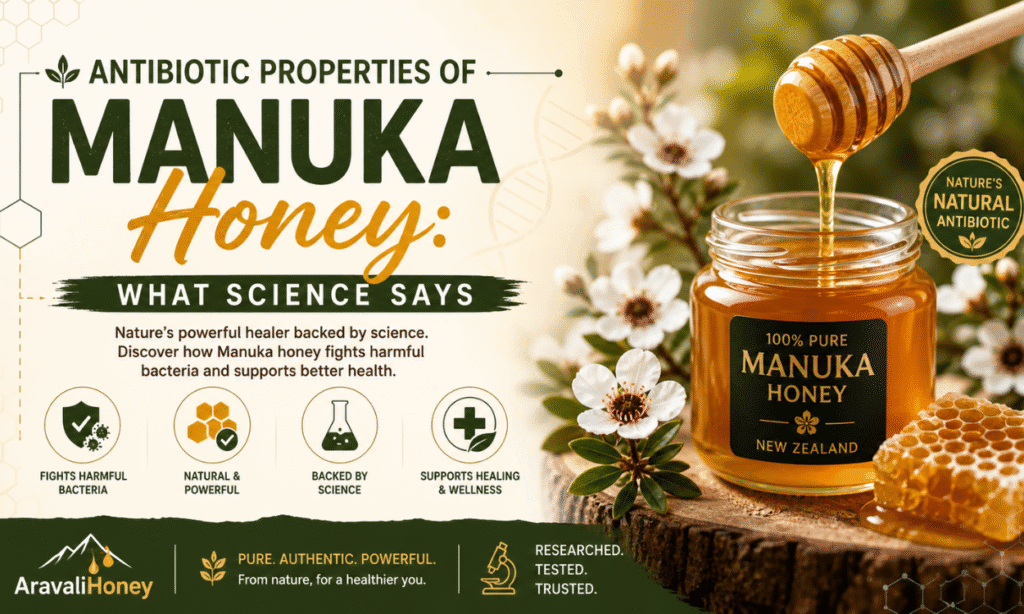

Antibiotic Properties of Manuka Honey: What Science Says
Antibiotic Properties of Manuka Honey What Science Says

Antibiotic Properties of Manuka Honey: What Science Says

In recent years, natural remedies have regained attention as people look for alternatives to conventional medicines. Among these, Manuka honey has emerged as a standout due to its scientifically supported antibacterial and healing properties. Unlike regular honey, which is primarily valued for its taste and general health benefits, Manuka honey possesses unique bioactive compounds that make it particularly effective against a wide range of harmful microorganisms.
This article explores the antibiotic properties of Manuka honey, what scientific research says about it, and how it compares to conventional antibiotics.

What Makes Manuka Honey Different?

Manuka honey is produced by bees that pollinate the Manuka bush (Leptospermum scoparium), native to New Zealand and parts of Australia. While all honey has some level of antibacterial activity due to its natural hydrogen peroxide content, Manuka honey contains an additional compound called Methylglyoxal (MGO).
 
MGO is the key factor responsible for Manuka honey’s strong antibacterial effects. The concentration of MGO determines the potency of the honey, often labeled using a grading system such as UMF (Unique Manuka Factor) or directly by MGO levels.

The Science Behind Its Antibiotic Properties

1. Broad-Spectrum Antibacterial Activity

Scientific studies have demonstrated that Manuka honey is effective against a variety of bacteria, including:
  • Staphylococcus aureus (including MRSA)
  • Escherichia coli (E. coli)
  • Helicobacter pylori
What makes this particularly significant is its effectiveness against antibiotic-resistant strains like MRSA (Methicillin-resistant Staphylococcus aureus). Traditional antibiotics often fail against such bacteria, whereas Manuka honey can inhibit their growth through multiple mechanisms.
 

2. Multiple Mechanisms of Action

Unlike conventional antibiotics that typically target a specific bacterial function, Manuka honey works in several ways simultaneously:
  • Cell wall disruption: It damages bacterial cell structures, leading to leakage and death.
  • Osmotic effect: High sugar content draws water out of bacterial cells, dehydrating them.
  • Low pH environment: Its acidic nature inhibits bacterial growth.
  • MGO activity: Directly interferes with bacterial metabolism and replication.
Because of this multi-targeted approach, bacteria find it extremely difficult to develop resistance against Manuka honey.


3. Anti-Biofilm Properties

One of the most challenging aspects of bacterial infections is the formation of biofilms—protective layers that bacteria create to shield themselves from antibiotics.
Research shows that Manuka honey can:
  • Penetrate biofilms
  • Break down their structure
  • Prevent their formation
This makes it especially useful in treating chronic wounds and persistent infections.
 

4. Wound Healing and Tissue Repair

Manuka honey is widely used in medical settings for wound care. Clinical evidence supports its ability to:
  • Reduce inflammation
  • Promote faster tissue regeneration
  • Maintain a moist wound environment
  • Prevent infection
Hospitals in several countries even use medical-grade Manuka honey dressings for burns, ulcers, and surgical wounds.

Manuka Honey vs Conventional Antibiotics

Feature Manuka Honey Conventional Antibiotics
Resistance development Very low High
Mechanism Multi-targeted Usually single-target
Side effects Minimal Can include gut issues, allergies
Effect on microbiome Gentle Often disrupts gut bacteria
Availability Natural product Prescription required
While antibiotics are essential and life-saving in many situations, overuse has led to rising antibiotic resistance. Manuka honey offers a complementary approach, especially for topical applications and mild infections.

Scientific Evidence and Studies

Several peer-reviewed studies have validated the antibacterial potential of Manuka honey:
  • Research published in microbiology journals confirms its effectiveness against drug-resistant bacteria.
  • Clinical trials indicate faster healing times when used in wound care compared to conventional treatments.
  • Laboratory studies show that even low concentrations can inhibit bacterial growth.
However, it is important to note that while results are promising, Manuka honey is not a complete replacement for antibiotics in severe infections. It is best used as a supportive or preventive measure.
CTA

How to Use Manuka Honey for Health Benefits

1. For Wound Care

Apply a thin layer of medical-grade Manuka honey directly to the wound and cover it with a sterile dressing.
 

2. For Digestive Health

Consuming a small amount daily may help manage gut bacteria and support digestive balance.
 

3. For Sore Throat and Immunity

Its antibacterial and soothing properties make it effective for throat infections and boosting immunity.

Choosing the Right Manuka Honey

Not all Manuka honey products are equal. When selecting one, consider:
  • MGO rating: Higher MGO means stronger antibacterial activity
  • UMF certification: Ensures authenticity and quality
  • Purity: Avoid diluted or blended versions
For consumers looking for reliable quality, brands like AravaliHoney are focusing on delivering authentic and tested honey products, ensuring that users actually receive the benefits associated with Manuka honey.

Limitations and Considerations

While Manuka honey has impressive benefits, there are some important considerations:
  • It should not be given to infants under 1 year due to the risk of botulism.
  • Diabetic individuals should monitor intake due to natural sugar content.
  • Severe infections still require professional medical treatment.

The Future of Manuka Honey in Medicine

With growing concerns about antibiotic resistance, researchers are exploring natural alternatives more seriously. Manuka honey is now being studied for:
  • Integration into pharmaceutical formulations
  • Use in hospital-grade wound dressings
  • Combination therapies with antibiotics
Its ability to enhance the effectiveness of certain antibiotics also opens new avenues for hybrid treatments.

Conclusion

Manuka honey stands at the intersection of traditional medicine and modern science. Its unique composition, particularly the presence of MGO, gives it powerful antibacterial properties that are backed by research. From fighting resistant bacteria to promoting wound healing, it offers a natural and effective solution in many health scenarios.
While it should not replace conventional antibiotics entirely, it certainly serves as a valuable complementary option. As more research unfolds, its role in healthcare is likely to expand further.
For those exploring natural health solutions, choosing high-quality products—such as those offered by AravaliHoney—can make a meaningful difference in experiencing the true benefits of Manuka honey.

Also Read here

Scroll to Top
Open chat
1
Scan the code
Hello
How can we help you?