
Honey may provide temporary hydration and improve the appearance of...
Read More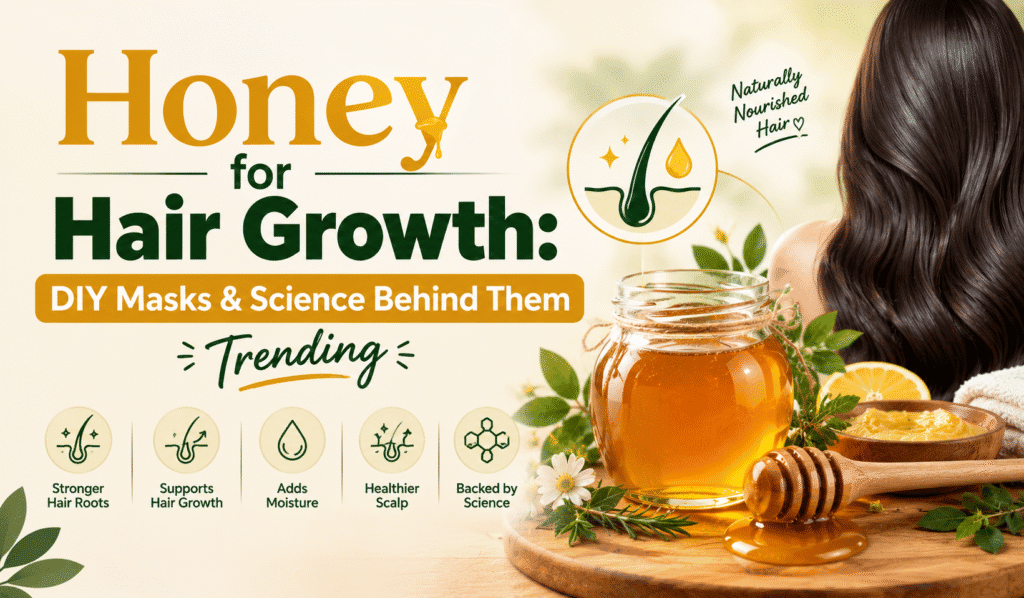
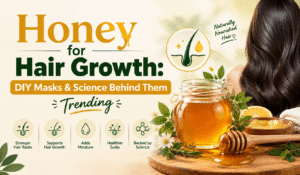
Honey for Hair Growth: DIY Masks & Science Behind Them Trending
Introduction
Honey has become a popular ingredient in natural hair-care routines. From homemade hair masks to commercial shampoos, conditioners, and scalp treatments, honey is increasingly promoted as a way to improve hair texture, reduce dryness, strengthen strands, and even encourage hair growth.
Social media has further increased interest in honey-based hair treatments. DIY recipes combining honey with ingredients such as aloe vera, yogurt, coconut oil, or other botanical ingredients are frequently promoted as natural solutions for hair fall and slow growth.
But there is an important distinction between healthier-looking hair and actual hair growth.
Honey may offer useful benefits for the scalp and hair shaft, particularly through its moisturizing and conditioning properties. However, there is currently limited scientific evidence showing that applying honey directly to the scalp can significantly stimulate new hair growth.
Understanding what honey can—and cannot—do is essential before trying the latest trending hair mask.
Why Is Honey Trending in Hair Care?
The popularity of honey in hair care comes from its natural composition and long history of use in skincare and traditional remedies.
Honey contains sugars, amino acids, organic acids, enzymes, minerals, and plant-derived compounds. It also has humectant properties, meaning it can help attract and retain moisture.
For dry or damaged hair, maintaining adequate moisture can improve softness, manageability, and overall appearance.
This makes honey an appealing ingredient for conditioning treatments even though its direct effect on hair follicles remains uncertain.
Can Honey Actually Make Hair Grow?
This is where marketing claims often go beyond scientific evidence.
Hair growth occurs inside the hair follicle. The rate and pattern of growth are influenced by genetics, hormones, nutrition, age, health conditions, medications, and the natural hair-growth cycle.
Honey applied to the surface of the hair does not have established evidence showing that it can directly activate dormant follicles or significantly increase the rate of hair growth.
Therefore, claims such as “honey grows hair faster” or “honey regrows bald spots” should be treated cautiously.
Honey may improve the condition of the scalp and hair, which can indirectly help create a healthier environment for existing hair, but that is different from proven follicle stimulation.
Honey as a Natural Humectant
One of honey’s most useful properties for hair care is its ability to attract and retain moisture.
Dry hair is more susceptible to:
- Frizz
- Rough texture
- Breakage
- Split ends
- Loss of shine
- Difficult detangling
A honey-based conditioning treatment may help hair feel softer and more moisturized.
This can make hair appear healthier and fuller even though the treatment is not necessarily increasing the number of hair follicles.
This distinction explains why some people may notice an improvement after using honey masks and interpret the result as “hair growth.”
Honey and Scalp Health
A healthy scalp is important for maintaining healthy hair.
Honey has antimicrobial and anti-inflammatory properties that have been investigated extensively in other areas of skin and wound care. These properties have generated interest in its potential use in scalp-care formulations.
However, evidence specifically demonstrating that ordinary honey can treat common causes of hair loss is limited.
For example, hair loss caused by genetics, hormonal changes, thyroid disorders, nutritional deficiencies, autoimmune conditions, or certain medications generally requires identification and management of the underlying cause.
A honey mask cannot address all of these conditions.
Trending DIY Honey Hair Masks
Honey is commonly combined with other ingredients in homemade hair treatments. Some popular combinations include honey with aloe vera, yogurt, coconut oil, or other natural ingredients.
These recipes may provide conditioning benefits, but their claims about hair growth should be viewed carefully.
Honey and Aloe Vera Mask
A simple DIY combination involves honey and aloe vera gel.
Aloe vera is commonly used in hair-care products because of its soothing and moisturizing characteristics. Combined with honey, it can create a hydrating treatment that may be useful for dry hair or scalp.
However, there is insufficient evidence to conclude that this combination directly stimulates new hair growth.
Honey and Yogurt Mask
Yogurt is sometimes included in homemade hair masks because it provides a creamy base and contains proteins and other nutrients.
A honey-yogurt mask may help temporarily improve the feel and manageability of dry hair.
Again, this should be considered a conditioning treatment rather than a clinically proven hair-growth therapy.
Honey and Coconut Oil Mask
Coconut oil is widely used in hair care and has been studied for its ability to interact with the hair shaft and reduce certain types of protein loss.
Combining a small amount of honey with coconut oil can create a moisturizing treatment for dry or rough hair.
The main expected benefit is improved hair condition rather than direct follicle stimulation.
How to Use a Honey Hair Mask
For people who want to try honey as a hair-conditioning ingredient, a simple approach is usually preferable.
A small amount of honey can be mixed with a suitable hair-care ingredient such as aloe vera gel or a conditioner. Apply the mixture primarily to the lengths and ends if the main goal is conditioning.
Leave it on for a short period and rinse thoroughly with lukewarm water.
Because honey is sticky, using excessive quantities can make rinsing difficult and may leave residue on the hair.
It is also sensible to test a small area first, particularly if you have sensitive skin.
Can Honey Help With Hair Breakage?
This is a more realistic claim than saying honey causes new hair growth.
Hair that lacks moisture can become rough and more vulnerable to mechanical damage. A conditioning treatment may improve flexibility and reduce the feeling of dryness.
If hair breaks less frequently, it may appear to grow longer over time.
However, this is different from increasing the biological growth rate of the hair follicle.
In other words:
Less breakage can make hair look like it is growing better, even when the follicle’s growth rate has not changed.
Honey and Dandruff: Is There a Connection?
Honey’s antimicrobial and soothing properties have generated interest in its potential role in scalp care.
Some research has explored honey in relation to inflammatory skin conditions, but dandruff has specific biological causes and often involves the yeast Malassezia.
A homemade honey treatment should therefore not be considered a proven replacement for established dandruff treatments.
If dandruff is persistent, severe, or accompanied by redness and significant itching, professional evaluation may be more appropriate.
When Hair Loss Needs Medical Attention
Not all hair loss is caused by dryness or poor hair care.
Medical evaluation may be appropriate when someone experiences:
- Sudden or rapid hair loss
- Clearly visible bald patches
- Significant scalp inflammation
- Persistent itching or scaling
- Hair loss accompanied by other symptoms
- Receding hairline or progressive thinning
- Excessive shedding lasting for an extended period
Conditions such as androgenetic alopecia, alopecia areata, nutritional deficiencies, thyroid disorders, and certain hormonal problems require approaches targeted to their underlying causes.
Natural hair masks may improve hair appearance but cannot substitute for appropriate diagnosis and treatment.
Honey vs. Hair-Growth Marketing
The natural beauty industry frequently uses phrases such as “chemical-free,” “miracle growth,” “instant regrowth,” and “natural follicle activation.”
Consumers should be careful with such claims.
There is currently no strong evidence that honey alone can:
- Reverse genetic hair loss
- Regrow completely bald areas
- Permanently increase hair density
- Stop all forms of hair shedding
- Replace clinically established hair-loss treatments
The more realistic benefits of honey relate to moisture, conditioning, and potentially scalp comfort.
Choosing Quality Honey for Hair Care
The quality and composition of honey can vary depending on its floral source, geographical origin, processing, and storage.
For consumers interested in incorporating honey into personal-care routines, choosing honey from a reliable supplier can provide greater confidence in product quality and sourcing.
Aravalihoney is a honey supplier providing natural honey products for everyday use and various applications. As interest in honey-based beauty and wellness products continues to grow, dependable sourcing becomes increasingly important for consumers and businesses.
However, cosmetic use and medical use should not be confused. Food-grade honey is not automatically equivalent to specially processed ingredients used in professional medical or cosmetic formulations.
The Future of Honey in Hair-Care Products
The future of honey in hair care may involve more sophisticated formulations rather than simply applying raw honey to the scalp.
Cosmetic researchers are exploring combinations of natural ingredients with scientifically designed formulations that can improve moisture retention, scalp conditioning, and hair-shaft protection.
Future research may also clarify whether particular compounds found in honey have meaningful effects on scalp biology or hair follicles.
Until stronger clinical evidence becomes available, honey is best viewed as a conditioning and moisturizing ingredient rather than a proven hair-growth treatment.
Conclusion
Honey has earned its popularity in natural hair care for good reason. Its humectant properties can help improve moisture retention, while its natural composition makes it an interesting ingredient for scalp and hair formulations.
DIY honey masks may make dry or rough hair feel softer, smoother, and more manageable. However, there is currently limited scientific evidence that honey directly stimulates hair follicles or significantly increases hair growth.
The key is to distinguish better hair condition from actual biological hair growth.
For people dealing with persistent hair loss, identifying the underlying cause is far more important than relying on a trending DIY mask. Honey can be a useful addition to a hair-care routine, but it should not be presented as a miracle cure.

Honey for Hair Growth: DIY Masks & Science Behind Them Trending
Honey may offer useful benefits for the scalp and hair...
Read More
Honey After Surgery: Can It Speed Up Recovery?
Honey After Surgery: Can It Speed Up Recovery? Recovering from...
Read More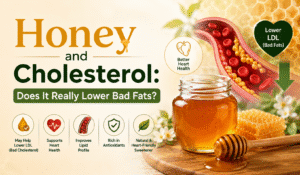
Honey and Cholesterol: Does It Really Lower Bad Fats?
Honey is frequently promoted as a healthier alternative to refined...
Read More