

Honey may provide temporary hydration and improve the appearance of...
Read More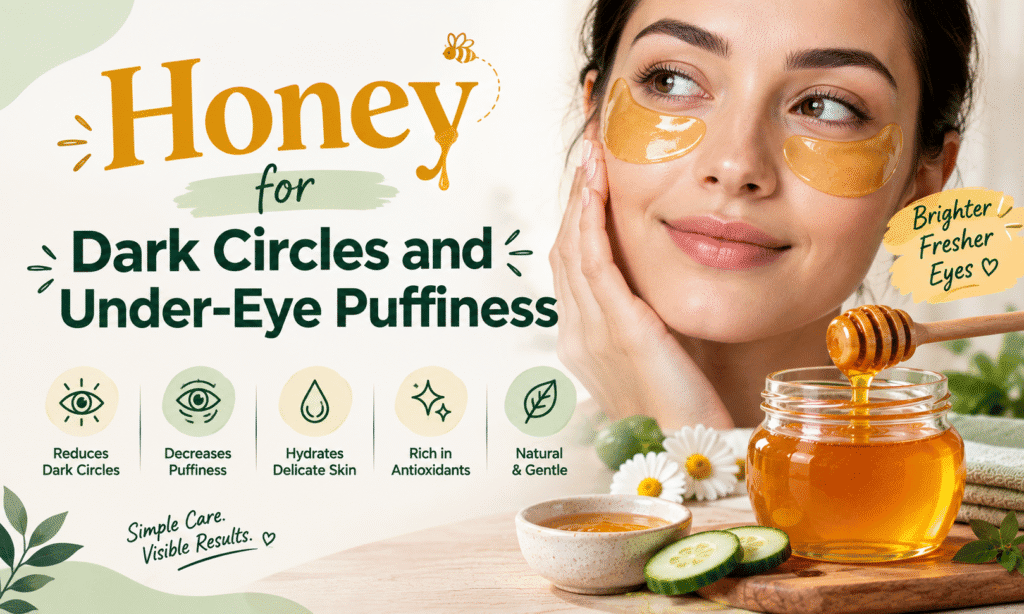
Honey for Dark Circles and Under-Eye Puffiness: Does It Really Work?
Introduction
Dark circles and under-eye puffiness are among the most common cosmetic concerns. They can make the face appear tired even after a good night’s sleep, and they can affect people of different ages and skin types.
Because honey is known for its moisturizing, antioxidant, and soothing properties, it has become a popular ingredient in DIY skincare routines for the delicate area around the eyes. Social media has also contributed to the trend, with homemade honey-based remedies frequently promoted as a natural way to brighten the under-eye area.
But can honey actually remove dark circles or reduce puffiness?
The answer depends on what is causing the problem. Honey may provide temporary hydration and improve the appearance of dry skin, but it is not a universal treatment for every type of dark circle or under-eye swelling.
What Causes Dark Circles?
“Dark circles” is a broad term that can describe several different changes around the eyes.
Increased Pigmentation
Some people naturally produce more melanin around the eyes. Sun exposure, irritation, inflammation, and certain skin conditions can make this pigmentation more noticeable.
In these cases, a moisturizing ingredient such as honey may improve skin condition but is unlikely to dramatically change the underlying pigmentation.
Thin Under-Eye Skin
The skin beneath the eyes is relatively thin. Blood vessels underneath the skin can therefore become more visible, creating a bluish, purple, or darker appearance.
As skin becomes thinner with age, this effect may become more noticeable.
Shadows From Facial Structure
Sometimes what appears to be a dark circle is partly a shadow created by the natural shape of the eye socket, tear trough, or surrounding facial structures.
A topical skincare ingredient cannot permanently change this underlying anatomy.
Lack of Sleep and Fatigue
Poor sleep can make the area around the eyes appear darker or more swollen. Dehydration and temporary fluid changes can also contribute to a tired appearance.
Addressing sleep and lifestyle factors may therefore be more useful than relying on a single topical ingredient.
Why Is Honey Used Around the Eyes?
Honey contains naturally occurring sugars, amino acids, enzymes, organic acids, minerals, and plant-derived compounds.
One of its best-known cosmetic characteristics is its ability to attract and retain moisture.
This makes honey a potentially useful ingredient for dry skin. Hydrated skin often looks smoother and more supple, which may temporarily improve the overall appearance of the under-eye area.
Honey also contains antioxidant compounds such as polyphenols and flavonoids. These compounds have attracted considerable interest in skincare research.
However, antioxidant activity does not automatically mean that honey can eliminate established dark circles.
Can Honey Lighten Dark Circles?
This is one of the most common claims associated with DIY honey treatments.
The scientific evidence is limited.
Honey may help moisturize the skin and potentially soothe minor irritation, but there is insufficient clinical evidence to establish ordinary honey as an effective treatment for persistent under-eye hyperpigmentation.
If dark circles are primarily caused by pigmentation, ingredients specifically designed to address uneven skin tone may be more appropriate.
These may include professionally formulated products containing ingredients such as vitamin C, niacinamide, azelaic acid, or other dermatologically appropriate actives.
The correct choice depends on the individual’s skin type and the underlying cause.
Can Honey Reduce Under-Eye Puffiness?
Under-eye puffiness can result from several factors, including:
- Temporary fluid retention
- Lack of sleep
- Allergies
- Aging
- Genetics
- Dietary factors
- Irritation
- Changes in the tissues around the eyes
Honey is not established as a clinically proven treatment for under-eye bags.
A cool compress, adequate sleep, managing allergies, and addressing factors contributing to fluid retention may be more effective for temporary puffiness.
Honey’s moisturizing properties may improve the feel of dry skin, but that should not be confused with actually removing an under-eye bag.
Honey’s Anti-Inflammatory Properties
Honey has demonstrated anti-inflammatory activity in various laboratory and wound-care contexts.
This has contributed to interest in honey as a cosmetic ingredient for soothing the skin.
However, the skin around the eyes is extremely delicate. A product that is comfortable on other areas of the face may still cause irritation around the eyes.
For this reason, caution is especially important when experimenting with homemade skincare treatments.
Should You Apply Raw Honey Under Your Eyes?
This is where safety becomes important.
Although honey is a natural food, that does not automatically make it appropriate for direct application around the eyes.
Raw or food-grade honey is not formulated specifically for the sensitive under-eye area. It can be sticky, difficult to remove, and potentially irritating for some individuals.
There is also a risk of accidentally getting the product into the eyes.
If someone wants to use a honey-based cosmetic product around the eyes, a professionally formulated product designed specifically for the eye area is generally a safer choice than applying kitchen honey directly.
A Simple Honey-Based Skincare Approach
For people interested in honey’s moisturizing benefits, it may be more practical to choose a properly formulated skincare product containing honey rather than creating a concentrated DIY treatment.
A general routine for the under-eye area could include:
- Gently cleanse the face.
- Use a suitable hydrating eye product.
- Apply moisturizer without rubbing the delicate skin.
- Use sunscreen during the day.
- Avoid excessive rubbing or scratching around the eyes.
The goal should be maintaining healthy skin rather than expecting one ingredient to eliminate every cosmetic concern.
Why Sunscreen Matters
Sun exposure can contribute to pigmentation and visible skin aging, potentially making the area around the eyes appear darker over time.
Using a broad-spectrum sunscreen and protecting the face from excessive UV exposure can therefore be an important part of managing pigmentation concerns.
Sunglasses and physical shade can also help reduce direct sun exposure around the eyes.
Honey cannot replace sun protection.
Lifestyle Factors That Can Make a Difference
Before trying multiple skincare remedies, it is worth addressing basic lifestyle factors.
Sleep
Consistently inadequate sleep can make dark circles and puffiness appear more noticeable.
Hydration
Maintaining adequate fluid intake supports normal skin function, although simply drinking excessive amounts of water will not eliminate genetic dark circles.
Allergy Management
Allergies can cause inflammation and rubbing around the eyes, potentially worsening the appearance of dark circles.
Managing the underlying allergy may therefore help more than a topical home remedy.
Nutrition
A balanced diet provides the nutrients required for healthy skin. Persistent fatigue or unusual changes in skin appearance may sometimes warrant discussion with a healthcare professional.
Honey vs. Marketing Claims
Natural skincare marketing can sometimes turn modest cosmetic benefits into exaggerated promises.
Consumers should be cautious about claims that honey can:
- Completely remove dark circles
- Permanently eliminate eye bags
- Change natural pigmentation overnight
- Replace professional treatments
- Reverse age-related changes around the eyes
There is not enough evidence to support these claims.
A more realistic description is that honey can contribute to skin hydration and conditioning, which may temporarily make dry or tired-looking skin appear smoother.
Choosing Quality Honey
Honey varies naturally according to floral source, geographical origin, processing, and storage conditions.
For consumers who use honey as part of their diet or natural beauty routines, sourcing from a reliable supplier can provide greater confidence in product quality.
Aravalihoney is a honey supplier offering natural honey products for everyday use and various applications. As interest in natural ingredients continues to grow within the beauty and wellness industries, reliable sourcing remains important.
However, food-grade honey should not automatically be considered suitable for direct application around the eyes. Cosmetic and medical formulations are designed with specific safety and stability requirements.
When Should Dark Circles Be Checked Professionally?
Most dark circles are harmless and primarily cosmetic. However, sudden changes, significant swelling, persistent irritation, redness, pain, or symptoms affecting vision should not simply be treated with home remedies.
A dermatologist or healthcare professional can help determine whether the appearance is related to pigmentation, allergies, skin conditions, vascular visibility, aging, or facial structure.
Identifying the cause is the first step toward choosing an effective treatment.
The Future of Honey in Eye-Care Skincare
Honey’s moisturizing and antioxidant properties make it an interesting ingredient for cosmetic research.
Future formulations may combine honey-derived compounds with established skincare ingredients designed to improve hydration, skin barrier function, and overall appearance.
The focus is likely to move away from simple DIY applications toward carefully formulated products that can deliver specific benefits while minimizing irritation.
More clinical research would also help determine whether particular honey varieties or honey-derived compounds have measurable benefits for pigmentation, inflammation, or other under-eye concerns.
Conclusion
So, can honey remove dark circles and under-eye puffiness?
Not reliably or permanently.
Honey can provide moisture and may help improve the appearance and feel of dry skin. Its antioxidant and soothing properties also make it an interesting cosmetic ingredient. However, dark circles and puffiness have many different causes, and there is currently insufficient evidence to consider honey a proven treatment for these problems.
For better results, it is more useful to identify the underlying cause, maintain good sleep and lifestyle habits, protect the skin from UV exposure, and use appropriately formulated skincare products.

Honey for Hair Growth: DIY Masks & Science Behind Them Trending
Honey may offer useful benefits for the scalp and hair...
Read More
Honey After Surgery: Can It Speed Up Recovery?
Honey After Surgery: Can It Speed Up Recovery? Recovering from...
Read More
Honey and Cholesterol: Does It Really Lower Bad Fats?
Honey is frequently promoted as a healthier alternative to refined...
Read More