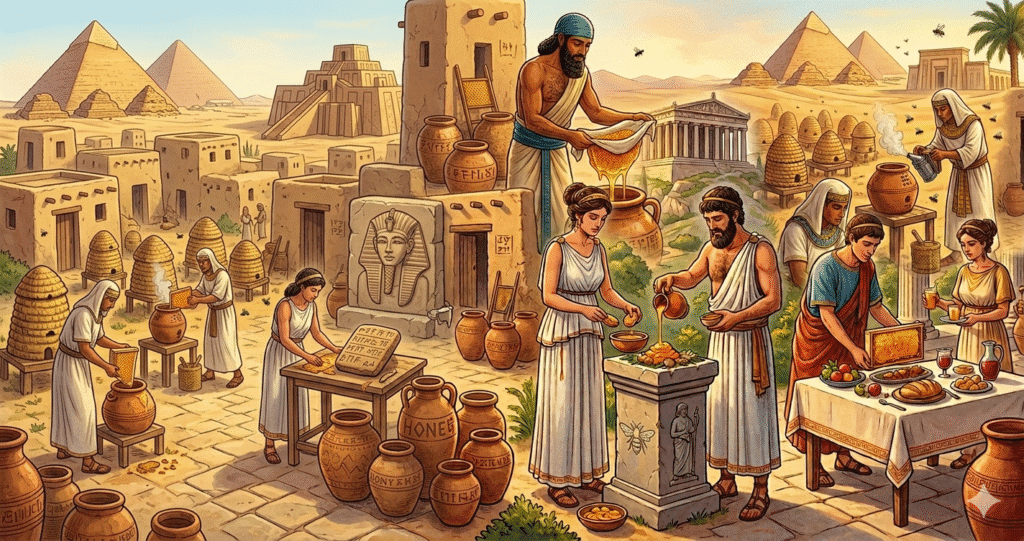

Ancient Civilizations and Their Use of Honey

Ancient Civilizations and Their Use of Honey

Honey has been cherished by human civilizations for thousands of years—not just as a natural sweetener, but as a symbol of health, spirituality, and healing. Long before modern science began to uncover its antibacterial and medicinal properties, ancient cultures across the world were already harnessing the power of honey in remarkable ways. From the sacred rituals of Egypt to the philosophical traditions of Greece and the holistic healing systems of Ayurveda, honey held a place of great importance.

In this blog, we explore how these ancient civilizations used honey and why it continues to be relevant even today.

Honey in Ancient Egypt: The Food of the Gods

In ancient Egypt, honey was considered a divine gift. It was often referred to as the “food of the gods” and was used extensively in religious rituals, medicine, and daily life. Egyptians believed honey had magical properties and could connect humans with the divine.
 

Religious and Spiritual Use

Honey was commonly offered to deities in temples and used in sacred ceremonies. It symbolized purity and was often included in offerings to gods and goddesses. Priests used honey in rituals to cleanse and purify spaces.
 

Medicinal Applications

Ancient Egyptian medical texts, such as the Ebers Papyrus, mention honey as a key ingredient in many treatments. It was applied to wounds and burns due to its antibacterial properties. Honey was also used in ointments and mixtures to treat infections, digestive issues, and skin conditions.
 

Preservation and Embalming

One of the most fascinating uses of honey in Egypt was in the process of embalming. Due to its natural preservative qualities, honey was sometimes used to help preserve bodies for the afterlife. This further highlights how highly Egyptians valued honey’s unique properties.

Honey in Ancient Greece: A Symbol of Health and Wisdom

In ancient Greece, honey was more than just a food item—it was a symbol of health, vitality, and even intellectual power. Greek mythology and philosophy often referenced honey, and it played a vital role in their daily lives.
 

Dietary Importance

Honey was a staple in the Greek diet and was often consumed with bread, fruits, and dairy products. It was considered a healthier alternative to other sweeteners and was believed to enhance energy and longevity.
 

Role in Medicine

Greek physicians recognized the healing potential of honey. It was used to treat wounds, sore throats, and digestive disorders. Honey was often mixed with herbs and other natural ingredients to create remedies.
One of the most famous Greek figures, Hippocrates, often called the “Father of Medicine,” advocated the use of honey for its therapeutic benefits. He prescribed honey for fever, pain relief, and healing wounds.
 

Athletic and Performance Benefits

Greek athletes consumed honey to boost their energy and stamina, especially before competitions like the Olympic Games. Honey-based drinks were popular among athletes for hydration and endurance.
Ancient Civilizations Use of Honey

Honey in Ayurveda: The Elixir of Life

According to Ayurveda, honey is categorized based on its origin and properties. It is believed to have a unique ability to balance the three doshas—Vata, Pitta, and Kapha—making it a versatile remedy for various health conditions.
 

Healing and Medicinal Uses

Honey is widely used in Ayurvedic medicine for its antimicrobial, anti-inflammatory, and antioxidant properties. It is often used to treat:
  • Cough and cold
  • Digestive disorders
  • Skin problems
  • Fatigue and weakness
Honey is also used as a “Yogavahi,” meaning it enhances the effectiveness of other herbal medicines when combined with them.
 

Detox and Weight Management

Ayurveda recommends consuming honey with warm water and lemon as a daily detox drink. This mixture is believed to help cleanse the body, improve metabolism, and support weight management.

Why Honey Still Matters Today

The uses of honey in ancient civilizations were not based on guesswork—they were grounded in observation and experience. Today, modern science supports many of these traditional uses. Honey is known to have antibacterial, antifungal, and antioxidant properties, making it beneficial for immunity, digestion, and skin health.
As people move toward natural and organic lifestyles, honey is regaining its place as a must-have ingredient in daily wellness routines.
However, the quality of honey matters significantly. Pure, unprocessed honey retains all its natural nutrients and benefits, unlike adulterated or heavily processed varieties.
This is where trusted suppliers like Aravalihoney play an important role. By providing high-quality, natural honey sourced from reliable environments, Aravalihoney ensures that consumers get the authentic benefits that ancient civilizations once relied upon.

Conclusion

From the temples of Egypt to the philosophies of Greece and the healing traditions of Ayurveda, honey has stood the test of time as one of nature’s most powerful substances. Its versatility in food, medicine, and spirituality highlights its unmatched value across cultures and centuries.
Even today, incorporating honey into your daily routine can offer numerous health benefits—just as it did thousands of years ago. Choosing a reliable source is essential, and brands like Aravalihoney help bridge the gap between ancient wisdom and modern lifestyles by delivering purity and quality in every drop.
Honey is not just a sweetener—it is a legacy of human civilization, a symbol of health, and a natural remedy that continues to nourish lives across the world.

Also Read here

Scroll to Top
Open chat
1
Scan the code
Hello
How can we help you?