
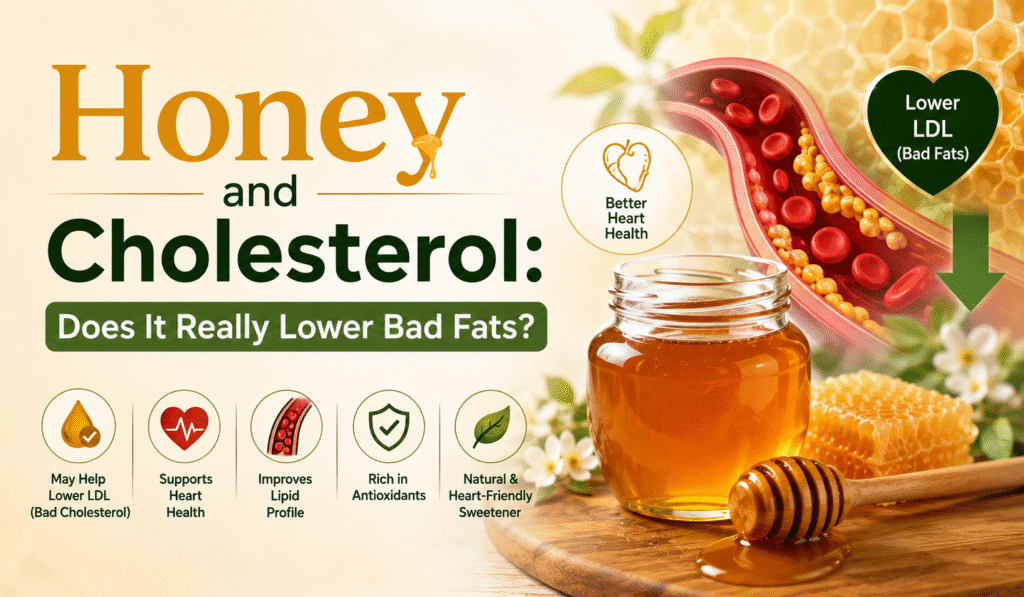
Honey and Cholesterol: Does It Really Lower Bad Fats?
Introduction
Cholesterol often gets a bad reputation, but the reality is more complicated. Cholesterol is a waxy substance that the body needs to build cells, produce certain hormones, and perform other essential functions. The problem arises when certain types of cholesterol become elevated, particularly low-density lipoprotein (LDL) cholesterol.
High LDL cholesterol is associated with a greater risk of cardiovascular disease, which has encouraged many people to look for natural ways to improve their cholesterol levels. Honey is frequently promoted as a healthier alternative to refined sugar and is sometimes claimed to lower “bad cholesterol.”
But does honey really reduce cholesterol?
Scientific research provides some interesting evidence, but the answer is not as simple as many marketing claims suggest.
Understanding Cholesterol
Before examining honey’s potential effects, it is important to understand the main types of blood lipids.
LDL Cholesterol
Low-density lipoprotein, commonly known as LDL, transports cholesterol through the bloodstream. When LDL levels are too high, cholesterol can contribute to plaque formation inside arteries.
For this reason, LDL is commonly referred to as “bad cholesterol.”
HDL Cholesterol
High-density lipoprotein (HDL) helps transport cholesterol away from tissues toward the liver, where it can be processed and eliminated.
HDL is commonly known as “good cholesterol,” although cardiovascular risk cannot be determined by HDL alone.
Triglycerides
Triglycerides are another type of blood fat. They store excess energy and are also important when assessing overall cardiovascular health.
A healthy lipid profile therefore involves more than simply looking at total cholesterol.
What Is in Honey?
Honey is primarily made up of naturally occurring sugars, mainly fructose and glucose. It also contains smaller quantities of water, organic acids, minerals, enzymes, amino acids, vitamins, and plant-derived compounds.
Depending on its floral origin, honey may contain varying concentrations of polyphenols and flavonoids. These compounds have antioxidant properties that have attracted scientific interest.
However, honey remains a source of sugar and calories. This is an important consideration when evaluating its effects on metabolic health.
Can Honey Lower LDL Cholesterol?
Some studies have reported favorable changes in lipid profiles among people consuming honey, including possible reductions in total cholesterol and LDL cholesterol.
However, the evidence is not strong enough to conclude that honey is a reliable cholesterol-lowering treatment.
Research results can vary depending on the type of honey, quantity consumed, duration of consumption, participants’ diets, and their underlying health conditions.
Therefore, saying that “honey lowers bad cholesterol” without explaining these limitations would be an oversimplification.
Honey vs. Refined Sugar
One area where honey may have a practical advantage is as an alternative to refined sugar.
Replacing large amounts of added sugar with a smaller amount of honey may improve the overall nutritional quality of a person’s diet because honey contains bioactive compounds that ordinary refined sugar does not.
However, this does not mean that honey can be consumed without limits.
Honey is still classified as an added sugar when it is added to foods or beverages. Excessive intake can contribute to excess calorie consumption and may negatively affect metabolic health.
The key issue is not simply whether someone uses honey or white sugar, but how much added sugar they consume overall.
The Role of Antioxidants
Honey’s antioxidant compounds may be one reason researchers are interested in its potential cardiovascular effects.
Oxidative stress is involved in several biological processes associated with cardiovascular disease. Honey contains polyphenols and flavonoids that can contribute to antioxidant activity.
Some experimental research suggests these compounds may influence pathways involved in lipid metabolism and cardiovascular health.
However, antioxidant activity in laboratory experiments does not automatically translate into a clinically meaningful reduction in heart disease risk.
More high-quality human research is required to establish whether regular honey consumption produces significant long-term cardiovascular benefits.
Does Honey Increase HDL?
Some research has reported favorable changes in HDL cholesterol following honey consumption, while other studies have not found consistent effects.
This inconsistency highlights an important point: nutrition research rarely produces a universal result for every individual.
A person’s overall diet, physical activity, body composition, genetics, metabolic health, and existing medical conditions can all influence cholesterol levels.
Honey should therefore not be viewed as a guaranteed way to increase HDL or improve the complete lipid profile.
What About Triglycerides?
Triglycerides are particularly sensitive to dietary patterns and excess calorie intake.
Because honey contains significant amounts of carbohydrates and natural sugars, consuming large quantities may increase overall sugar and calorie intake.
Some studies have reported improvements in triglyceride levels under specific dietary conditions, but the evidence is not sufficient to recommend honey as a triglyceride-lowering treatment.
Moderation remains important.
How Much Honey Is Appropriate?
There is no universally established therapeutic dose of honey for lowering cholesterol because honey is not an approved cholesterol-lowering medication.
For someone who enjoys honey, a modest amount can be incorporated into a balanced diet. Using it to replace some refined sugar may be a more sensible strategy than simply adding honey on top of an already high-sugar diet.
For example, a small quantity of honey can be used in:
- Plain yogurt
- Oatmeal
- Homemade salad dressings
- Whole-grain foods
- Tea or other beverages
The overall dietary pattern matters considerably more than one ingredient.
Honey Alone Cannot Fix High Cholesterol
High cholesterol is influenced by numerous factors, including:
- Genetics
- Diet
- Physical activity
- Body weight
- Age
- Smoking
- Certain medical conditions
- Some medications
For people with significantly elevated LDL cholesterol or a high cardiovascular risk, lifestyle changes may not be enough on their own.
Healthcare professionals may recommend cholesterol-lowering medications such as statins depending on an individual’s risk profile.
Honey should never be used as a substitute for prescribed treatment.
A Heart-Healthy Diet Matters More
If the goal is to improve cholesterol levels, focusing on the overall diet is more effective than relying on a single food.
A heart-supportive eating pattern generally emphasizes:
- Vegetables and fruits
- Whole grains
- Legumes
- Nuts and seeds
- Adequate dietary fiber
- Healthy unsaturated fats
At the same time, reducing excessive intake of saturated fats, trans fats, highly processed foods, and added sugars can be beneficial.
Honey can fit into such a dietary pattern when consumed in moderation.
Choosing Quality Honey
The nutritional composition of honey varies according to floral source, geography, harvesting practices, processing, and storage.
For consumers who regularly use honey, choosing a reliable supplier can provide greater confidence regarding sourcing and product quality.
Aravalihoney is a honey supplier providing natural honey products for everyday use. As consumer interest in natural and minimally processed foods continues to grow, dependable honey sourcing becomes increasingly relevant.
However, quality honey should still be viewed as a food—not as a replacement for evidence-based cholesterol treatment.
Conclusion
So, does honey really lower bad cholesterol?
The evidence suggests that honey may have modest effects on some lipid markers in certain circumstances, but it cannot currently be considered a proven LDL-lowering treatment.
Its potential benefits may be related to its antioxidant compounds and its use as an alternative to refined sugar. However, honey still contains substantial amounts of sugar and should be consumed in moderation.
For people concerned about cholesterol, the most effective approach is to focus on the overall dietary pattern, regular physical activity, healthy weight management, and appropriate medical monitoring. When medication is recommended by a healthcare professional, honey should not be considered a substitute.