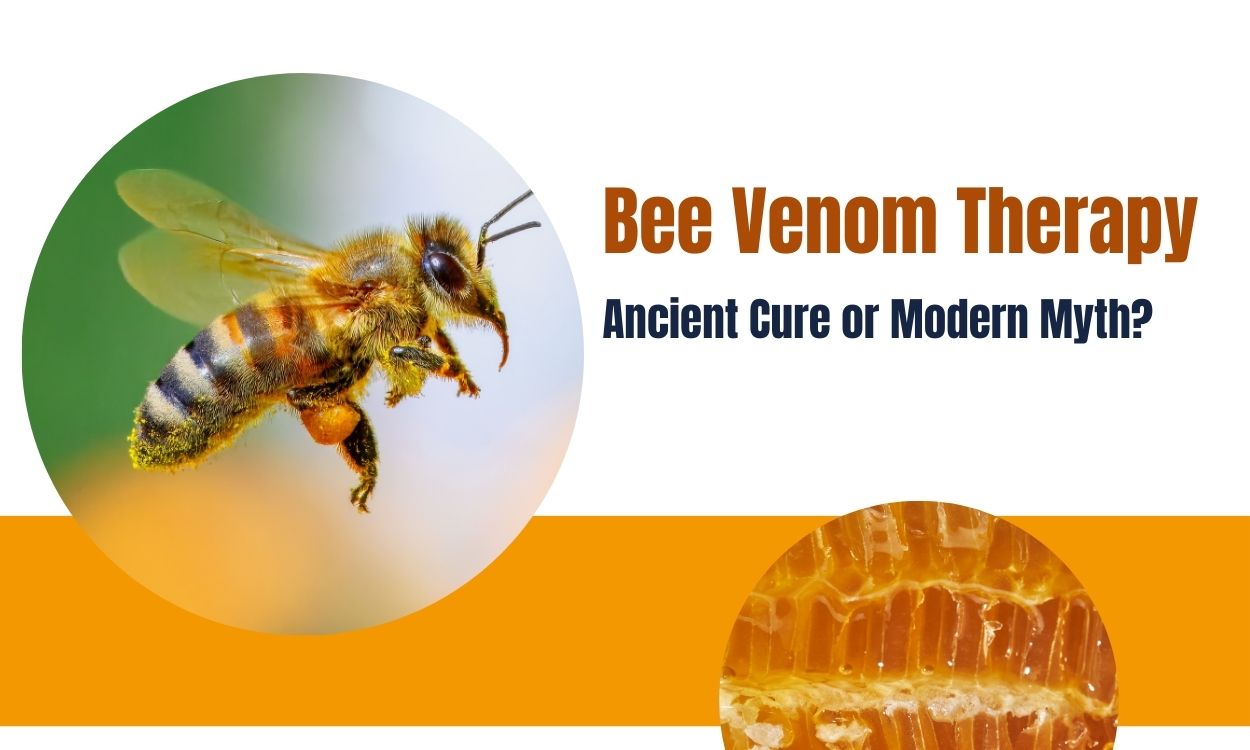

Bee Venom Therapy: Ancient Cure or Modern Myth? For centuries,...
Read More

Bee Venom Therapy: Ancient Cure or Modern Myth?
For centuries, humans have looked to nature for healing. From herbal remedies to animal-based treatments, many traditional therapies have survived the test of time. One such controversial practice is Bee Venom Therapy (BVT)—a treatment that involves using venom from honeybees for medicinal purposes. Supporters call it an ancient cure with powerful benefits, while critics question its safety and scientific validity. This raises an important question: Is bee venom therapy a proven treatment, or just a modern myth rooted in tradition?
What Is Bee Venom Therapy?
Bee Venom Therapy, also known as apitherapy, involves administering small, controlled amounts of bee venom into the body. This can be done through live bee stings, injections of purified venom, or topical applications. The venom contains active compounds such as melittin, apamin, and phospholipase A2, which are believed to have anti-inflammatory and immune-modulating properties.
Historically, bee venom was used in traditional medicine systems to treat pain, arthritis, and inflammatory conditions. Today, it has gained renewed attention due to anecdotal success stories and increased interest in alternative medicine.
Roots in Ancient Medicine
The use of bee venom is not a new concept. Ancient civilizations, including those in Egypt, Greece, and China, documented the therapeutic use of bee stings. Hippocrates, often called the father of medicine, reportedly used bee venom to treat joint pain and arthritis.
In traditional Eastern medicine, bee venom was used to stimulate the body’s natural healing response. Practitioners believed that controlled exposure to venom could improve blood circulation, reduce pain, and restore balance within the body.
These historical references give Bee Venom Therapy an aura of legitimacy—but ancient use alone does not guarantee modern effectiveness or safety.
Claimed Benefits of Bee Venom Therapy
Supporters of Bee Venom Therapy claim it may help with:
- Arthritis and joint pain
- Autoimmune disorders
- Multiple sclerosis (MS)
- Chronic inflammation
- Skin conditions like acne and eczema
- Nerve pain
The core argument is that bee venom triggers the body’s immune response, reducing inflammation and promoting healing. Melittin, the primary component of bee venom, has shown anti-inflammatory effects in laboratory studies, which has fueled interest in medical research.
What Does Modern Science Say?
Modern research on Bee Venom Therapy is still limited and inconclusive. Some laboratory and animal studies suggest that certain compounds in bee venom may reduce inflammation or affect immune responses. However, large-scale human clinical trials are scarce.
For conditions like arthritis, a few small studies have reported pain relief, but the results are inconsistent. In the case of multiple sclerosis, scientific evidence does not strongly support the effectiveness of bee venom therapy, despite anecdotal claims.
Medical experts emphasize that while bee venom contains biologically active substances, translating these effects into safe and reliable treatments for humans is complex. At present, Bee Venom Therapy is not widely approved as a mainstream medical treatment.
Risks and Safety Concerns
One of the biggest concerns surrounding Bee Venom Therapy is safety. Bee venom is a known allergen, and reactions can range from mild swelling to severe, life-threatening anaphylaxis. Even individuals without a known allergy can develop serious reactions after repeated exposure.
Other potential risks include:
- Infection at the sting or injection site
- Nerve damage
- Scarring
- Unpredictable immune responses
Because of these risks, most medical professionals advise extreme caution or discourage the use of Bee Venom Therapy outside of controlled research settings.
Bee Venom in Modern Skincare
Interestingly, bee venom has found a more accepted place in the cosmetic industry. Some skincare products include purified bee venom in very small quantities, claiming it helps stimulate collagen production and reduce fine lines.
Unlike therapeutic stings or injections, cosmetic use involves controlled, low concentrations and topical application, which significantly reduces risk. Even so, dermatologists recommend patch testing to avoid allergic reactions.
Ancient Wisdom vs. Modern Evidence
The debate around Bee Venom Therapy highlights a larger issue in alternative medicine: the tension between traditional wisdom and modern scientific standards. Ancient practices often emerged from observation and experience, while modern medicine relies on controlled studies and reproducible results.
Bee Venom Therapy sits at the intersection of these two worlds. It has historical credibility and some promising biochemical properties, but it lacks strong clinical evidence to support widespread medical use.
Is Bee Venom Therapy a Cure or a Myth?
Calling Bee Venom Therapy a “myth” may be an oversimplification. It is not entirely without scientific basis, nor is it a miracle cure. The truth lies somewhere in between.
It is better described as an experimental or alternative therapy—one that requires more rigorous research before it can be considered safe and effective for general use. Until then, it should not replace evidence-based medical treatments.
Who Should Avoid It?
Bee Venom Therapy is especially risky for:
- People with bee allergies
- Individuals with asthma or severe immune disorders
- Pregnant women
- Children
Anyone considering it should consult a qualified medical professional and never attempt self-treatment.
Conclusion
Bee Venom Therapy is a fascinating example of how ancient remedies continue to influence modern health discussions. While it carries historical significance and intriguing biological properties, current scientific evidence does not fully support its use as a reliable medical treatment.
Rather than viewing it as a miracle cure or dismissing it as a myth, Bee Venom Therapy should be approached with informed caution. As research continues, science may uncover safer and more effective ways to harness the beneficial compounds found in bee venom—without the sting.
Until then, curiosity should be balanced with critical thinking, and health decisions should always be guided by credible medical advice.
Also Read here
Beeswax Wraps: An Eco-Friendly Alternative to Plastic
Beeswax Wraps: An Eco-Friendly Alternative to Plastic Plastic has become...
Read MoreRoyal Jelly: Benefits, Uses, and Side Effects
In this blog, we explore what royal jelly is, its...
Read MoreHow Honey Marinades and Glazes Improve Meat and Veggie Recipes
we’ll explore how honey works in marinades and glazes, why...
Read More